News
General
38 views
US bars direct return of citizens from Congo over Ebola
Jul 15, 2026
📍 Philadelphia, PA, USA
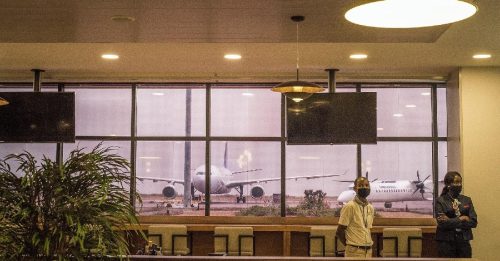
🦠🇺🇸 The Trump administration has announced strict new travel restrictions preventing U.S. citizens in the Democratic Republic of Congo from flying directly back to the United States, citing the country's rapidly worsening Ebola outbreak and intensifying efforts to prevent the virus from reaching American soil.
Under the new policy, U.S. citizens who have recently been in Congo must remain in a third country for 21 days before becoming eligible to board a commercial flight to the United States.
Federal officials said affected travelers will be placed on the government's "do-not-board" list until they complete the mandatory waiting period, with the restrictions enforced under existing federal public health and transportation authorities.
The decision follows a significant escalation of the Ebola outbreak in the Democratic Republic of Congo, where health authorities have confirmed 1,926 infections and 702 deaths, making it one of the largest Ebola outbreaks in recent years.
The World Health Organization (WHO) has warned that the actual number of infections could be substantially higher because many cases remain undetected due to limited surveillance and difficult conditions on the ground.
The policy also comes after at least two American humanitarian workers contracted Ebola while serving in Congo. One patient was medically evacuated to Germany for treatment, while another received assistance through coordination between the U.S. Centers for Disease Control and Prevention (CDC) and the State Department.
The CDC and State Department said they will continue assisting Americans affected by the new travel restrictions while supporting international Ebola response operations.
The United States has also contributed funding, medical expertise, and personnel to global efforts aimed at containing the outbreak and has explored establishing quarantine facilities outside the country for exposed Americans.
However, the new restrictions have drawn criticism from several public health experts and humanitarian organizations, who argue that forcing Americans to remain in third countries could discourage healthcare workers and aid volunteers from responding to future outbreaks.
Critics also contend that the policy shifts medical responsibility to other nations rather than strengthening domestic preparedness for infectious disease emergencies.
The current outbreak involves the Bundibugyo strain of Ebola, for which no fully approved vaccine currently exists, making containment significantly more challenging than previous outbreaks involving the Zaire strain.
Health officials have identified armed conflict, population displacement, attacks on healthcare workers, and limited access to remote communities as major obstacles slowing containment efforts.
The latest measures build upon the Trump administration's broader border health strategy, which already includes enhanced airport screening, tighter travel monitoring, and additional safeguards designed to minimize the risk of imported Ebola cases entering the United States.
As the outbreak continues to expand, global health authorities remain focused on accelerating containment efforts while balancing public health protections with the need to maintain international humanitarian response operations.
Under the new policy, U.S. citizens who have recently been in Congo must remain in a third country for 21 days before becoming eligible to board a commercial flight to the United States.
Federal officials said affected travelers will be placed on the government's "do-not-board" list until they complete the mandatory waiting period, with the restrictions enforced under existing federal public health and transportation authorities.
The decision follows a significant escalation of the Ebola outbreak in the Democratic Republic of Congo, where health authorities have confirmed 1,926 infections and 702 deaths, making it one of the largest Ebola outbreaks in recent years.
The World Health Organization (WHO) has warned that the actual number of infections could be substantially higher because many cases remain undetected due to limited surveillance and difficult conditions on the ground.
The policy also comes after at least two American humanitarian workers contracted Ebola while serving in Congo. One patient was medically evacuated to Germany for treatment, while another received assistance through coordination between the U.S. Centers for Disease Control and Prevention (CDC) and the State Department.
The CDC and State Department said they will continue assisting Americans affected by the new travel restrictions while supporting international Ebola response operations.
The United States has also contributed funding, medical expertise, and personnel to global efforts aimed at containing the outbreak and has explored establishing quarantine facilities outside the country for exposed Americans.
However, the new restrictions have drawn criticism from several public health experts and humanitarian organizations, who argue that forcing Americans to remain in third countries could discourage healthcare workers and aid volunteers from responding to future outbreaks.
Critics also contend that the policy shifts medical responsibility to other nations rather than strengthening domestic preparedness for infectious disease emergencies.
The current outbreak involves the Bundibugyo strain of Ebola, for which no fully approved vaccine currently exists, making containment significantly more challenging than previous outbreaks involving the Zaire strain.
Health officials have identified armed conflict, population displacement, attacks on healthcare workers, and limited access to remote communities as major obstacles slowing containment efforts.
The latest measures build upon the Trump administration's broader border health strategy, which already includes enhanced airport screening, tighter travel monitoring, and additional safeguards designed to minimize the risk of imported Ebola cases entering the United States.
As the outbreak continues to expand, global health authorities remain focused on accelerating containment efforts while balancing public health protections with the need to maintain international humanitarian response operations.
Tags
news
Comments (0)
Login to post comments
No comments yet
Be the first to share your thoughts about this post.