News
General
29 views
Supersonic travel eyes comeback as quieter jets near reality
Aug 07, 2026
📍 Philadelphia, PA, USA
### Supersonic Passenger Travel Gains Momentum as Aviation Industry Tackles Sonic Boom Challenge
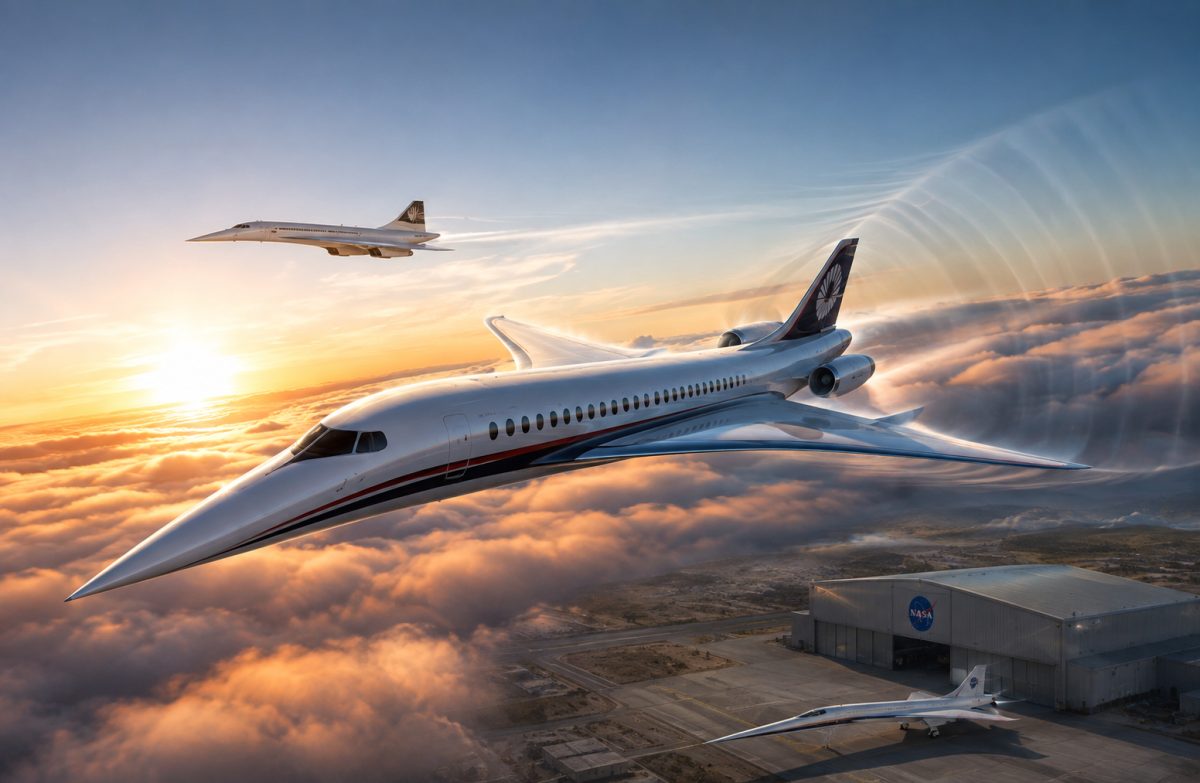
Commercial supersonic travel is showing renewed promise more than two decades after Concorde completed its final passenger flight, as aerospace companies and government agencies work to overcome the technical and regulatory barriers that have kept high-speed passenger aircraft grounded. The biggest challenge remains the sonic boom, the powerful noise created when an aircraft travels faster than sound and shock waves reach the ground. Advances in aerodynamics, propulsion systems and noise-reduction technology are now giving the aviation industry greater confidence that future supersonic aircraft could fly at high speeds without creating the disruptive noise historically associated with Concorde. NASA is playing a major role in testing this possibility through its experimental X-59 aircraft, developed as part of the agency’s Quesst mission. The aircraft is designed to replace the traditional sonic boom with a much quieter sound known as a sonic thump. Recent supersonic flight testing has provided researchers with valuable data about how the aircraft’s design affects the noise heard by people on the ground. NASA hopes the findings will help regulators evaluate whether existing restrictions on supersonic flights over land should eventually be reconsidered. The potential return of faster-than-sound passenger travel is not limited to government research. Private aerospace companies are also investing in the development of new commercial aircraft designed to dramatically reduce journey times. Colorado-based Boom Supersonic is developing its Overture passenger aircraft, which is designed to cruise at approximately Mach 1.7, significantly faster than conventional commercial airliners. The proposed aircraft is expected to accommodate between 60 and 80 passengers and could potentially reduce travel times on long-distance international routes. At the same time, regulatory discussions in the United States are beginning to reflect advances in aircraft technology and noise-control research. Government agencies are examining whether decades-old restrictions on overland supersonic flight remain appropriate if modern aircraft can demonstrate significantly quieter operations. However, any changes are expected to depend on extensive testing, certification requirements and evidence that communities would be comfortable with increased high-speed aircraft activity. The economics of supersonic aviation remain another major obstacle. Aircraft capable of traveling faster than sound generally require more advanced engineering, specialized materials and powerful propulsion systems, while higher fuel consumption can increase operating costs. Airlines would therefore need to determine whether passengers are willing to pay premium fares for substantially shorter travel times. Business aviation companies are also exploring high-speed alternatives, although some industry leaders believe very fast subsonic aircraft currently offer a more practical combination of speed, range, efficiency and cost. The future of commercial supersonic travel will therefore depend on more than simply proving that an aircraft can fly faster than sound. Manufacturers must demonstrate reliable performance, secure regulatory approval, develop suitable airport infrastructure and address environmental concerns surrounding fuel consumption and emissions. Airlines will also need sufficient customer demand to justify the significant investment required to operate such aircraft. Despite these challenges, progress in flight testing and aircraft design represents one of the most significant pushes toward commercial supersonic aviation since Concorde was retired in 2003. If quieter aircraft successfully pass testing and regulators approve new operating standards, passengers could eventually once again travel faster than sound on commercial routes. The next generation of supersonic aircraft aims to deliver the speed that made Concorde famous while avoiding the disruptive sonic booms that ultimately limited the aircraft’s ability to operate widely over land. For travelers, the technology could eventually transform long-distance journeys by cutting hours from international flights and bringing a new era of high-speed commercial aviation closer to reality.
Commercial supersonic travel is showing renewed promise more than two decades after Concorde completed its final passenger flight, as aerospace companies and government agencies work to overcome the technical and regulatory barriers that have kept high-speed passenger aircraft grounded. The biggest challenge remains the sonic boom, the powerful noise created when an aircraft travels faster than sound and shock waves reach the ground. Advances in aerodynamics, propulsion systems and noise-reduction technology are now giving the aviation industry greater confidence that future supersonic aircraft could fly at high speeds without creating the disruptive noise historically associated with Concorde. NASA is playing a major role in testing this possibility through its experimental X-59 aircraft, developed as part of the agency’s Quesst mission. The aircraft is designed to replace the traditional sonic boom with a much quieter sound known as a sonic thump. Recent supersonic flight testing has provided researchers with valuable data about how the aircraft’s design affects the noise heard by people on the ground. NASA hopes the findings will help regulators evaluate whether existing restrictions on supersonic flights over land should eventually be reconsidered. The potential return of faster-than-sound passenger travel is not limited to government research. Private aerospace companies are also investing in the development of new commercial aircraft designed to dramatically reduce journey times. Colorado-based Boom Supersonic is developing its Overture passenger aircraft, which is designed to cruise at approximately Mach 1.7, significantly faster than conventional commercial airliners. The proposed aircraft is expected to accommodate between 60 and 80 passengers and could potentially reduce travel times on long-distance international routes. At the same time, regulatory discussions in the United States are beginning to reflect advances in aircraft technology and noise-control research. Government agencies are examining whether decades-old restrictions on overland supersonic flight remain appropriate if modern aircraft can demonstrate significantly quieter operations. However, any changes are expected to depend on extensive testing, certification requirements and evidence that communities would be comfortable with increased high-speed aircraft activity. The economics of supersonic aviation remain another major obstacle. Aircraft capable of traveling faster than sound generally require more advanced engineering, specialized materials and powerful propulsion systems, while higher fuel consumption can increase operating costs. Airlines would therefore need to determine whether passengers are willing to pay premium fares for substantially shorter travel times. Business aviation companies are also exploring high-speed alternatives, although some industry leaders believe very fast subsonic aircraft currently offer a more practical combination of speed, range, efficiency and cost. The future of commercial supersonic travel will therefore depend on more than simply proving that an aircraft can fly faster than sound. Manufacturers must demonstrate reliable performance, secure regulatory approval, develop suitable airport infrastructure and address environmental concerns surrounding fuel consumption and emissions. Airlines will also need sufficient customer demand to justify the significant investment required to operate such aircraft. Despite these challenges, progress in flight testing and aircraft design represents one of the most significant pushes toward commercial supersonic aviation since Concorde was retired in 2003. If quieter aircraft successfully pass testing and regulators approve new operating standards, passengers could eventually once again travel faster than sound on commercial routes. The next generation of supersonic aircraft aims to deliver the speed that made Concorde famous while avoiding the disruptive sonic booms that ultimately limited the aircraft’s ability to operate widely over land. For travelers, the technology could eventually transform long-distance journeys by cutting hours from international flights and bringing a new era of high-speed commercial aviation closer to reality.
Tags
news
Comments (0)
Login to post comments
No comments yet
Be the first to share your thoughts about this post.