News
General
20 views
When AI distills intelligence, what happens to context?
Aug 12, 2026
📍 Philadelphia, PA, USA
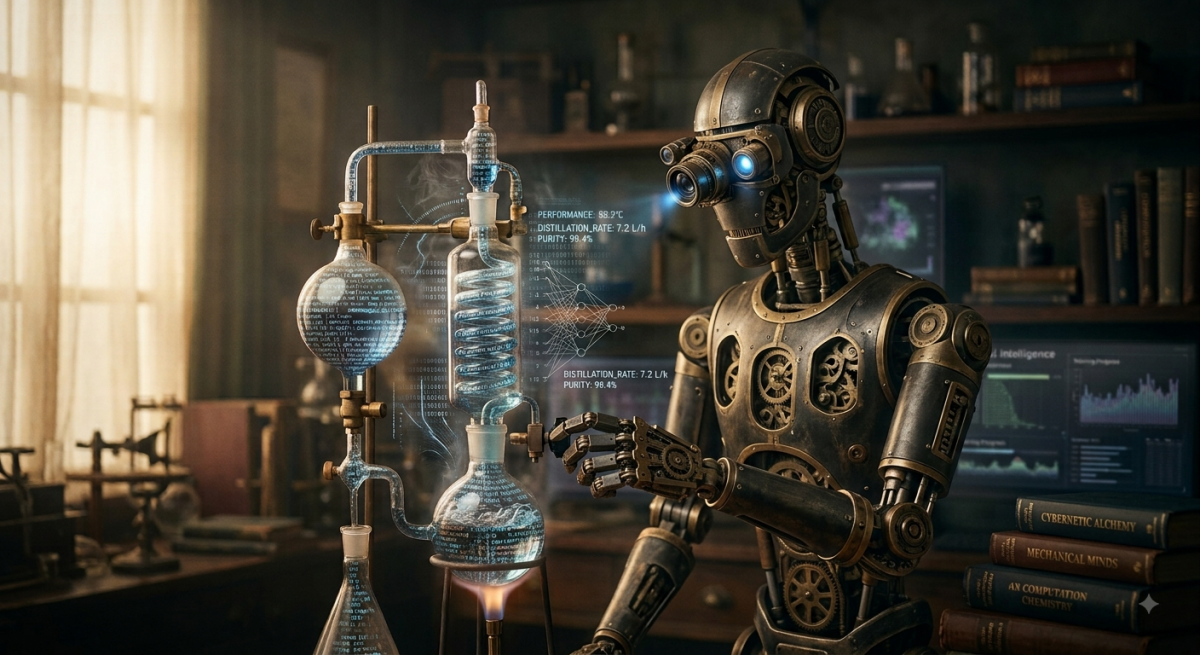
### AI Distillation Is Reshaping the Race for Intelligence—and Raising Questions About Human Context
Artificial intelligence is entering a new phase in which the most valuable asset may not be the AI model itself, but the intelligence that can be extracted from it. Model distillation, a technique in which smaller systems learn from the outputs of more powerful models, has become an increasingly important issue in the global AI race. The process allows a student model to learn from a teacher model without directly accessing its architecture, parameters or original training data. Instead, the student studies how the larger system responds to questions and uses those responses as training signals. The idea of knowledge distillation is not new, having been formally described by Geoffrey Hinton, Oriol Vinyals and Jeffrey Dean in 2015. Its importance, however, has grown dramatically as the cost of developing frontier AI systems has reached enormous levels. Training advanced models requires vast amounts of computing power, data, engineering expertise and financial investment. Distillation offers another route to acquiring some of those capabilities by learning from the behavior of an already powerful model. The technique is more sophisticated than simply copying answers because advanced models can provide information about the relative probability of different possible outcomes. These patterns allow smaller systems to learn how a teacher behaves across complex problems rather than merely memorizing individual responses. The economic implications are significant because organizations may potentially reproduce useful capabilities without bearing the full cost of building an equivalent model from scratch. That has helped turn distillation from a technical optimization into a strategic issue in the competition between the United States and China. American companies such as OpenAI, Google and Anthropic remain among the leading developers of frontier AI models, while Chinese companies are rapidly advancing their own systems. At the same time, restrictions on advanced semiconductor technology and access to some American AI services have created additional challenges for Chinese developers. Distillation could provide an alternative pathway by allowing companies to learn from the outputs of powerful models when direct access to their underlying technology is unavailable. Anthropic has said it detected what it described as large-scale efforts by Chinese AI companies including DeepSeek, Moonshot and MiniMax to extract capabilities from Claude through millions of interactions. If collected at sufficient scale, such interactions can become synthetic training data for another model. The controversy, however, extends beyond questions of competition, intellectual property and national security. The same fundamental process is increasingly relevant to the relationship between AI systems and human beings. Every interaction with an AI system can reveal information about how people communicate, make decisions, frame questions and evaluate answers. When collected at massive scale, those interactions can provide AI systems with powerful statistical representations of human behavior. An AI system analyzing years of a person’s writing, for example, could identify vocabulary, sentence structure, recurring ideas, preferences and patterns of reasoning. It might eventually reproduce that person’s writing style with remarkable accuracy. But reproducing behavior is not necessarily the same as understanding the individual behind it. This distinction becomes important because distillation is fundamentally about deciding what information matters. The process attempts to preserve information needed to reproduce useful behavior while removing information considered unnecessary or redundant. Human behavior, however, is filled with contradictions, emotions, uncertainty, memory and changing circumstances. What appears to be inconsistency in a dataset may actually reflect context that explains why a person behaved differently at different times. A patient who fails to take prescribed medication, for instance, may appear simply noncompliant in a statistical record. But the real explanation could involve cost, side effects, confusion about instructions or a loss of trust in a doctor. Without that context, a system may accurately capture the behavior while misunderstanding its cause. This highlights a fundamental difference between distillation and context. Distillation asks what information is necessary to reproduce behavior, while context asks what information is necessary to understand that behavior. Those questions do not always produce the same answer. The issue becomes even more significant as AI systems become capable of building increasingly sophisticated representations of individual people. A system trained on years of someone’s writing might predict their next argument, imitate their voice and identify their usual preferences. Yet prediction remains different from genuine understanding. Human uncertainty and inconsistency can sometimes be treated as flaws that AI should eliminate, but not every irregularity is noise. Some inconsistencies indicate learning, while uncertainty can represent an honest response to incomplete information. Emotional reactions can also reveal priorities that cannot be fully captured through statistical patterns. The danger, therefore, is not simply that AI distillation may remove information. It is that systems could discard information whose importance has not yet been recognized. This makes the debate over model distillation much broader than the competition between technology companies or nations. The emerging AI economy is increasingly based on the ability to create, observe, extract, reproduce and transfer intelligence. The teacher model does not necessarily need to be copied if its behavior can provide enough information to train another system. As AI becomes more capable, similar principles could be applied to human knowledge, preferences, decisions and communication. The central challenge will be determining which information can safely be discarded and which information carries the context necessary for meaningful understanding. AI developers have become increasingly skilled at separating signal from noise, but the next generation of systems may need to recognize that apparent noise can sometimes contain the most important signal. As artificial intelligence becomes better at distilling models and humans alike, the defining question may no longer be whether machines can reproduce what we do. It may be whether they can preserve enough context to understand why we do it.
Artificial intelligence is entering a new phase in which the most valuable asset may not be the AI model itself, but the intelligence that can be extracted from it. Model distillation, a technique in which smaller systems learn from the outputs of more powerful models, has become an increasingly important issue in the global AI race. The process allows a student model to learn from a teacher model without directly accessing its architecture, parameters or original training data. Instead, the student studies how the larger system responds to questions and uses those responses as training signals. The idea of knowledge distillation is not new, having been formally described by Geoffrey Hinton, Oriol Vinyals and Jeffrey Dean in 2015. Its importance, however, has grown dramatically as the cost of developing frontier AI systems has reached enormous levels. Training advanced models requires vast amounts of computing power, data, engineering expertise and financial investment. Distillation offers another route to acquiring some of those capabilities by learning from the behavior of an already powerful model. The technique is more sophisticated than simply copying answers because advanced models can provide information about the relative probability of different possible outcomes. These patterns allow smaller systems to learn how a teacher behaves across complex problems rather than merely memorizing individual responses. The economic implications are significant because organizations may potentially reproduce useful capabilities without bearing the full cost of building an equivalent model from scratch. That has helped turn distillation from a technical optimization into a strategic issue in the competition between the United States and China. American companies such as OpenAI, Google and Anthropic remain among the leading developers of frontier AI models, while Chinese companies are rapidly advancing their own systems. At the same time, restrictions on advanced semiconductor technology and access to some American AI services have created additional challenges for Chinese developers. Distillation could provide an alternative pathway by allowing companies to learn from the outputs of powerful models when direct access to their underlying technology is unavailable. Anthropic has said it detected what it described as large-scale efforts by Chinese AI companies including DeepSeek, Moonshot and MiniMax to extract capabilities from Claude through millions of interactions. If collected at sufficient scale, such interactions can become synthetic training data for another model. The controversy, however, extends beyond questions of competition, intellectual property and national security. The same fundamental process is increasingly relevant to the relationship between AI systems and human beings. Every interaction with an AI system can reveal information about how people communicate, make decisions, frame questions and evaluate answers. When collected at massive scale, those interactions can provide AI systems with powerful statistical representations of human behavior. An AI system analyzing years of a person’s writing, for example, could identify vocabulary, sentence structure, recurring ideas, preferences and patterns of reasoning. It might eventually reproduce that person’s writing style with remarkable accuracy. But reproducing behavior is not necessarily the same as understanding the individual behind it. This distinction becomes important because distillation is fundamentally about deciding what information matters. The process attempts to preserve information needed to reproduce useful behavior while removing information considered unnecessary or redundant. Human behavior, however, is filled with contradictions, emotions, uncertainty, memory and changing circumstances. What appears to be inconsistency in a dataset may actually reflect context that explains why a person behaved differently at different times. A patient who fails to take prescribed medication, for instance, may appear simply noncompliant in a statistical record. But the real explanation could involve cost, side effects, confusion about instructions or a loss of trust in a doctor. Without that context, a system may accurately capture the behavior while misunderstanding its cause. This highlights a fundamental difference between distillation and context. Distillation asks what information is necessary to reproduce behavior, while context asks what information is necessary to understand that behavior. Those questions do not always produce the same answer. The issue becomes even more significant as AI systems become capable of building increasingly sophisticated representations of individual people. A system trained on years of someone’s writing might predict their next argument, imitate their voice and identify their usual preferences. Yet prediction remains different from genuine understanding. Human uncertainty and inconsistency can sometimes be treated as flaws that AI should eliminate, but not every irregularity is noise. Some inconsistencies indicate learning, while uncertainty can represent an honest response to incomplete information. Emotional reactions can also reveal priorities that cannot be fully captured through statistical patterns. The danger, therefore, is not simply that AI distillation may remove information. It is that systems could discard information whose importance has not yet been recognized. This makes the debate over model distillation much broader than the competition between technology companies or nations. The emerging AI economy is increasingly based on the ability to create, observe, extract, reproduce and transfer intelligence. The teacher model does not necessarily need to be copied if its behavior can provide enough information to train another system. As AI becomes more capable, similar principles could be applied to human knowledge, preferences, decisions and communication. The central challenge will be determining which information can safely be discarded and which information carries the context necessary for meaningful understanding. AI developers have become increasingly skilled at separating signal from noise, but the next generation of systems may need to recognize that apparent noise can sometimes contain the most important signal. As artificial intelligence becomes better at distilling models and humans alike, the defining question may no longer be whether machines can reproduce what we do. It may be whether they can preserve enough context to understand why we do it.
Tags
news
Comments (0)
Login to post comments
No comments yet
Be the first to share your thoughts about this post.