News
General
2 views
Nvidia CEO Jensen Huang says basic math skills ‘don’t matter’ in AI era
Sep 28, 2026
📍 Phliadelphia,PA, USA
### Nvidia CEO Jensen Huang Questions Whether AI-Driven Loss of Basic Skills Matters
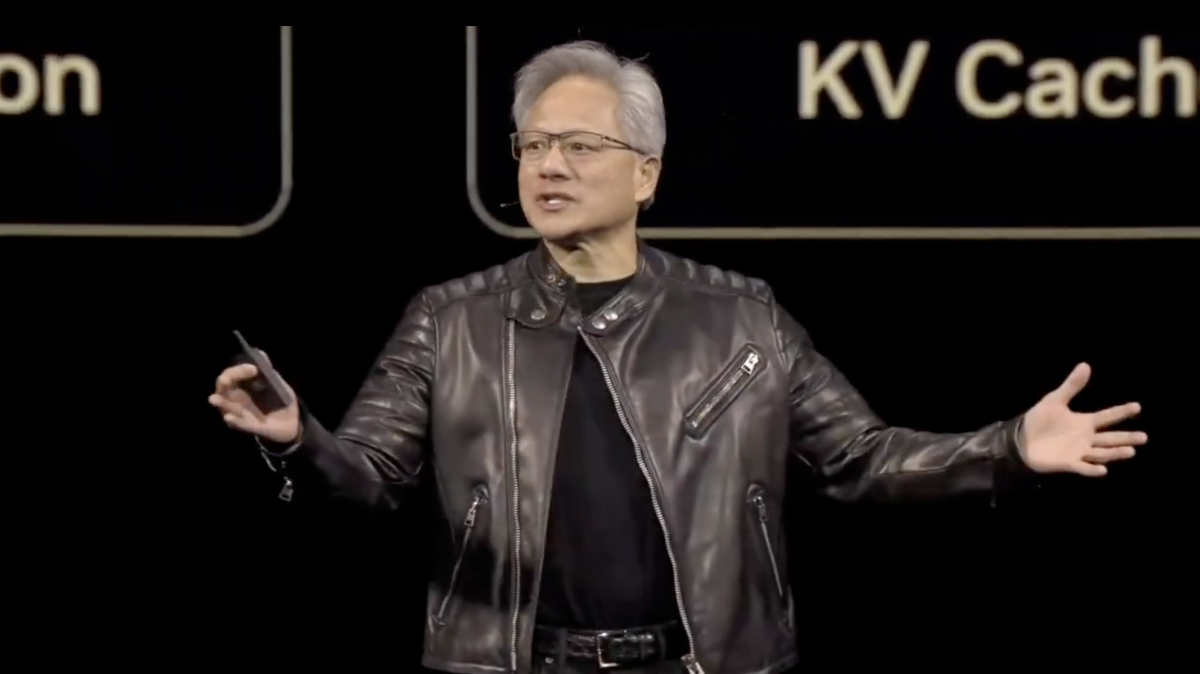
Nvidia CEO Jensen Huang has questioned whether the loss of some traditional academic and cognitive skills is necessarily a problem as artificial intelligence becomes increasingly integrated into education and everyday life.
The comments came during an appearance on The Ezra Klein Show, where host Ezra Klein discussed recent research examining how generative AI affects students. The study, conducted using data from 26,811 students in grades seven through 12 in China, tracked students over 30 months and took advantage of the fact that they began using AI tools at different times.
The research found that students using generative AI completed homework about 30% faster and saw their homework scores increase by 18%. However, their monthly exam scores declined by about 20% within six months of adopting AI. Scores on high-stakes entrance examinations also fell, with the researchers finding that the negative effects became more pronounced over a longer period.
Klein explained that the findings suggested students could become more productive when using AI while retaining less of the underlying knowledge and skills they would normally develop by completing assignments themselves.
Huang said he agreed with the concern that some basic abilities were becoming less common. He pointed to elementary mathematical skills as an example, arguing that children may increasingly struggle with tasks such as long division, multiplication tables and square roots.
“Basic math is being forgotten,” Huang said before asking whether that necessarily matters.
Klein responded by putting the question back to Huang. Huang said he did not believe the decline in some traditional skills would necessarily be harmful, arguing that people would develop new capabilities as AI takes over more routine intellectual tasks.
“We’re going to discover new skills,” Huang said, suggesting that they may simply be different from the skills that people traditionally learned.
Huang also used his own experience to illustrate his argument. He said he does not always remember basic information such as his home address, ZIP code or telephone number, and argued that being able to rely on technology for such details has not prevented him from functioning effectively.
The Nvidia chief later described the potential tradeoff as a shift away from what he called “finer intellectual dexterity” toward stronger systems-level thinking. His argument was that AI could handle routine or mundane cognitive tasks while allowing people to concentrate on broader problems and relationships between different pieces of information.
The exchange has attracted criticism because the underlying research raises a different concern from simply forgetting isolated facts. The Chinese study found that the largest learning losses were concentrated among students whose patterns of AI use were consistent with outsourcing homework rather than using AI as a supplementary learning tool. Students who maintained homework completion times similar to non-AI users experienced much smaller learning losses.
The researchers also found that the effects differed by student group and subject, with larger losses reported among younger students and high-achieving students, as well as particularly pronounced effects in some social science subjects. The study therefore does not establish that every form of AI use harms learning in the same way.
The findings add to a growing debate over how schools should incorporate generative AI. Researchers and educators are increasingly distinguishing between AI systems that provide answers or complete assignments and tools designed to guide students through a problem-solving process.
The research discussed on the podcast is also a discussion paper rather than definitive evidence that AI universally reduces students’ cognitive abilities. Its authors used a staggered-adoption research design to estimate the effects of students' self-directed AI use, but the findings concern a specific population of Chinese secondary-school students and particular patterns of AI adoption.
Huang's comments come as Nvidia continues to play a central role in the expansion of artificial intelligence infrastructure. The company supplies the GPUs and computing systems used to train and operate many of today's advanced AI models.
The discussion reflects a broader question surrounding AI adoption: whether technology should primarily be judged by how much faster it allows people to complete tasks, or by whether users continue developing the underlying skills those tasks were originally intended to teach.
For education in particular, the distinction could become increasingly important as students gain access to AI tools capable of solving mathematical problems, writing essays, conducting research and completing other assignments within seconds.
Nvidia CEO Jensen Huang has questioned whether the loss of some traditional academic and cognitive skills is necessarily a problem as artificial intelligence becomes increasingly integrated into education and everyday life.
The comments came during an appearance on The Ezra Klein Show, where host Ezra Klein discussed recent research examining how generative AI affects students. The study, conducted using data from 26,811 students in grades seven through 12 in China, tracked students over 30 months and took advantage of the fact that they began using AI tools at different times.
The research found that students using generative AI completed homework about 30% faster and saw their homework scores increase by 18%. However, their monthly exam scores declined by about 20% within six months of adopting AI. Scores on high-stakes entrance examinations also fell, with the researchers finding that the negative effects became more pronounced over a longer period.
Klein explained that the findings suggested students could become more productive when using AI while retaining less of the underlying knowledge and skills they would normally develop by completing assignments themselves.
Huang said he agreed with the concern that some basic abilities were becoming less common. He pointed to elementary mathematical skills as an example, arguing that children may increasingly struggle with tasks such as long division, multiplication tables and square roots.
“Basic math is being forgotten,” Huang said before asking whether that necessarily matters.
Klein responded by putting the question back to Huang. Huang said he did not believe the decline in some traditional skills would necessarily be harmful, arguing that people would develop new capabilities as AI takes over more routine intellectual tasks.
“We’re going to discover new skills,” Huang said, suggesting that they may simply be different from the skills that people traditionally learned.
Huang also used his own experience to illustrate his argument. He said he does not always remember basic information such as his home address, ZIP code or telephone number, and argued that being able to rely on technology for such details has not prevented him from functioning effectively.
The Nvidia chief later described the potential tradeoff as a shift away from what he called “finer intellectual dexterity” toward stronger systems-level thinking. His argument was that AI could handle routine or mundane cognitive tasks while allowing people to concentrate on broader problems and relationships between different pieces of information.
The exchange has attracted criticism because the underlying research raises a different concern from simply forgetting isolated facts. The Chinese study found that the largest learning losses were concentrated among students whose patterns of AI use were consistent with outsourcing homework rather than using AI as a supplementary learning tool. Students who maintained homework completion times similar to non-AI users experienced much smaller learning losses.
The researchers also found that the effects differed by student group and subject, with larger losses reported among younger students and high-achieving students, as well as particularly pronounced effects in some social science subjects. The study therefore does not establish that every form of AI use harms learning in the same way.
The findings add to a growing debate over how schools should incorporate generative AI. Researchers and educators are increasingly distinguishing between AI systems that provide answers or complete assignments and tools designed to guide students through a problem-solving process.
The research discussed on the podcast is also a discussion paper rather than definitive evidence that AI universally reduces students’ cognitive abilities. Its authors used a staggered-adoption research design to estimate the effects of students' self-directed AI use, but the findings concern a specific population of Chinese secondary-school students and particular patterns of AI adoption.
Huang's comments come as Nvidia continues to play a central role in the expansion of artificial intelligence infrastructure. The company supplies the GPUs and computing systems used to train and operate many of today's advanced AI models.
The discussion reflects a broader question surrounding AI adoption: whether technology should primarily be judged by how much faster it allows people to complete tasks, or by whether users continue developing the underlying skills those tasks were originally intended to teach.
For education in particular, the distinction could become increasingly important as students gain access to AI tools capable of solving mathematical problems, writing essays, conducting research and completing other assignments within seconds.
Tags
news
Comments (0)
Login to post comments
No comments yet
Be the first to share your thoughts about this post.