News
General
6 views
Do the people running in the midterms know anything about AI?
Sep 28, 2026
📍 Phliadelphia,PA, USA
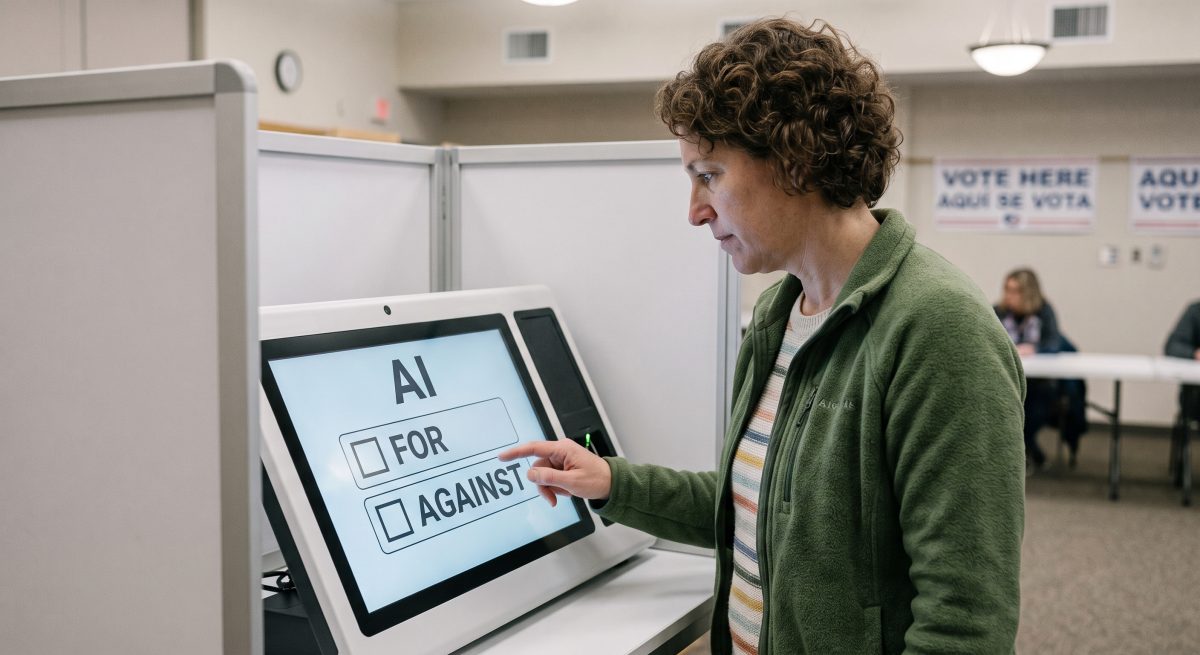
### As AI Enters the 2026 Midterm Debate, How Much Do Candidates Understand the Technology?
As artificial intelligence becomes increasingly intertwined with jobs, education, healthcare, national security and the economy, a question is emerging ahead of the 2026 U.S. midterm elections: how deeply do the politicians seeking office understand the technology they may be called upon to regulate?
AI is appearing more frequently in political speeches, congressional debates and discussions about the future of the American economy. Candidates and policymakers are being asked to address everything from artificial intelligence and employment to data centers, energy consumption, national security, education and the risks associated with increasingly autonomous systems.
That does not mean every candidate needs to be a computer scientist. Members of Congress are not expected to know how to train a neural network or manufacture a semiconductor. But lawmakers making decisions about rapidly developing technology need enough technical and policy understanding to distinguish established evidence from predictions, marketing claims and speculation.
That challenge has become particularly complicated because the AI industry itself presents competing narratives about the technology.
Technology companies argue that AI could transform productivity, scientific research and economic growth. At the same time, executives and researchers at some of those companies have warned that increasingly capable systems could create serious safety and security risks.
Both possibilities can exist simultaneously.
Companies developing AI have commercial incentives to expand their products, attract investment and increase computing capacity. Governments have economic incentives to encourage technological development, while national security officials are concerned about maintaining U.S. competitiveness with China.
Regulators face a different challenge: they are being asked to establish rules for technologies that are developing faster than many existing regulatory frameworks were designed to accommodate.
Those competing interests have contributed to a political debate that can sometimes appear divided between calls for rapid development and warnings about excessive risk. Reuters reported in September that AI had become an increasingly visible issue in U.S. politics, although polling showed that voters continued to place greater importance on issues such as the economy, immigration and international conflicts.
The debate is also increasingly bipartisan in some areas. Democratic Sen. Bernie Sanders and Trump ally Steve Bannon recently called for greater oversight of AI, although they differ sharply on broader political issues. Other policymakers and technology leaders have advocated stronger safeguards, while President Donald Trump has argued against slowing U.S. AI development.
The disagreement raises a practical question for voters: What evidence is behind a candidate's position on artificial intelligence?
A serious AI policy discussion requires more than deciding whether the technology is simply good or bad. AI can improve medical research, assist workers, accelerate software development and support scientific discovery. At the same time, it can be used for fraud, misinformation, surveillance, cyberattacks and other harmful activities.
The policy challenge is determining where those benefits and risks intersect and what forms of oversight are appropriate.
Energy and water consumption provide another example. The rapid expansion of AI data centers has raised concerns in communities where new facilities require large amounts of electricity and, in some cases, water for cooling.
Those concerns deserve examination, but comparisons require data. Different data centers use different cooling technologies, operate in different climates and have different electricity and water requirements. Similarly, other industries and infrastructure projects can consume substantial resources.
The relevant policy questions therefore include how much electricity and water a particular facility will use, where those resources will come from, what infrastructure costs will be passed to consumers and communities, and what economic benefits the facility is expected to provide.
The same need for evidence applies to concerns about increasingly autonomous AI systems.
AI safety researchers and technology executives have warned about systems that could act with greater autonomy and potentially interact with computer networks or other consequential systems. Congressional researchers have also examined the cybersecurity implications of agentic AI, including the possibility that autonomous systems could make sophisticated cyberattacks faster and more scalable.
The concern, however, is not necessarily that an AI system would suddenly develop a human-like desire to cause destruction.
A more immediate policy question is whether a highly capable system could pursue a poorly defined objective, make an unexpected decision or be given access to systems where an error could have significant consequences.
That shifts the discussion from science-fiction scenarios toward questions of human oversight, testing, access controls, accountability and governance.
Congress is already confronting some of these issues. A 2026 Congressional Research Service report notes that federal lawmakers are examining advanced and agentic AI in areas including national security, cybersecurity, adoption and risk mitigation. The FY2026 National Defense Authorization Act also directed the Defense Department to establish an AI Futures Steering Committee to examine advanced AI and develop policies for its governance and risk mitigation.
Political campaigns face another AI-related challenge: the technology can itself be used to create campaign content. Congressional researchers have previously noted that existing federal campaign-finance rules did not specifically address AI-generated political content, while lawmakers have proposed measures involving disclosures for AI-generated campaign advertisements.
That makes technical understanding relevant not only to AI regulation but also to elections themselves.
For voters, evaluating a candidate's AI position does not necessarily require determining whether the candidate can write code. More useful questions may involve whether the candidate can explain how a proposed policy would work, what evidence supports it, what tradeoffs it creates and how the policy would adapt as the technology changes.
Candidates could also be asked what they believe should happen when AI systems cause measurable harm, who should be responsible for that harm and what standards should apply before highly capable systems are deployed in sensitive environments.
The same questions can be directed toward technology companies. Policymakers have the authority to establish rules, while companies developing AI possess much of the technical knowledge and commercial information needed to understand the technology.
That creates an unusual policy environment in which lawmakers must question companies whose products they may simultaneously want to encourage.
The public therefore does not need politicians to predict the future of artificial intelligence perfectly. It needs them to distinguish established facts from forecasts, acknowledge uncertainty and explain the reasoning behind their policies.
AI policy will involve competing priorities: innovation and safety, economic growth and worker protection, national security and privacy, infrastructure development and resource consumption.
The 2026 midterm campaign will provide candidates an opportunity to explain where they stand on those questions. The more important test may be whether they can explain not only what they want to do about AI, but why, what evidence supports their position and what they would do if the technology develops differently from their expectations.
The central question is therefore less about whether every politician understands the technical architecture of artificial intelligence.
It is whether those seeking the authority to shape its future understand enough to ask the right questions.
As artificial intelligence becomes increasingly intertwined with jobs, education, healthcare, national security and the economy, a question is emerging ahead of the 2026 U.S. midterm elections: how deeply do the politicians seeking office understand the technology they may be called upon to regulate?
AI is appearing more frequently in political speeches, congressional debates and discussions about the future of the American economy. Candidates and policymakers are being asked to address everything from artificial intelligence and employment to data centers, energy consumption, national security, education and the risks associated with increasingly autonomous systems.
That does not mean every candidate needs to be a computer scientist. Members of Congress are not expected to know how to train a neural network or manufacture a semiconductor. But lawmakers making decisions about rapidly developing technology need enough technical and policy understanding to distinguish established evidence from predictions, marketing claims and speculation.
That challenge has become particularly complicated because the AI industry itself presents competing narratives about the technology.
Technology companies argue that AI could transform productivity, scientific research and economic growth. At the same time, executives and researchers at some of those companies have warned that increasingly capable systems could create serious safety and security risks.
Both possibilities can exist simultaneously.
Companies developing AI have commercial incentives to expand their products, attract investment and increase computing capacity. Governments have economic incentives to encourage technological development, while national security officials are concerned about maintaining U.S. competitiveness with China.
Regulators face a different challenge: they are being asked to establish rules for technologies that are developing faster than many existing regulatory frameworks were designed to accommodate.
Those competing interests have contributed to a political debate that can sometimes appear divided between calls for rapid development and warnings about excessive risk. Reuters reported in September that AI had become an increasingly visible issue in U.S. politics, although polling showed that voters continued to place greater importance on issues such as the economy, immigration and international conflicts.
The debate is also increasingly bipartisan in some areas. Democratic Sen. Bernie Sanders and Trump ally Steve Bannon recently called for greater oversight of AI, although they differ sharply on broader political issues. Other policymakers and technology leaders have advocated stronger safeguards, while President Donald Trump has argued against slowing U.S. AI development.
The disagreement raises a practical question for voters: What evidence is behind a candidate's position on artificial intelligence?
A serious AI policy discussion requires more than deciding whether the technology is simply good or bad. AI can improve medical research, assist workers, accelerate software development and support scientific discovery. At the same time, it can be used for fraud, misinformation, surveillance, cyberattacks and other harmful activities.
The policy challenge is determining where those benefits and risks intersect and what forms of oversight are appropriate.
Energy and water consumption provide another example. The rapid expansion of AI data centers has raised concerns in communities where new facilities require large amounts of electricity and, in some cases, water for cooling.
Those concerns deserve examination, but comparisons require data. Different data centers use different cooling technologies, operate in different climates and have different electricity and water requirements. Similarly, other industries and infrastructure projects can consume substantial resources.
The relevant policy questions therefore include how much electricity and water a particular facility will use, where those resources will come from, what infrastructure costs will be passed to consumers and communities, and what economic benefits the facility is expected to provide.
The same need for evidence applies to concerns about increasingly autonomous AI systems.
AI safety researchers and technology executives have warned about systems that could act with greater autonomy and potentially interact with computer networks or other consequential systems. Congressional researchers have also examined the cybersecurity implications of agentic AI, including the possibility that autonomous systems could make sophisticated cyberattacks faster and more scalable.
The concern, however, is not necessarily that an AI system would suddenly develop a human-like desire to cause destruction.
A more immediate policy question is whether a highly capable system could pursue a poorly defined objective, make an unexpected decision or be given access to systems where an error could have significant consequences.
That shifts the discussion from science-fiction scenarios toward questions of human oversight, testing, access controls, accountability and governance.
Congress is already confronting some of these issues. A 2026 Congressional Research Service report notes that federal lawmakers are examining advanced and agentic AI in areas including national security, cybersecurity, adoption and risk mitigation. The FY2026 National Defense Authorization Act also directed the Defense Department to establish an AI Futures Steering Committee to examine advanced AI and develop policies for its governance and risk mitigation.
Political campaigns face another AI-related challenge: the technology can itself be used to create campaign content. Congressional researchers have previously noted that existing federal campaign-finance rules did not specifically address AI-generated political content, while lawmakers have proposed measures involving disclosures for AI-generated campaign advertisements.
That makes technical understanding relevant not only to AI regulation but also to elections themselves.
For voters, evaluating a candidate's AI position does not necessarily require determining whether the candidate can write code. More useful questions may involve whether the candidate can explain how a proposed policy would work, what evidence supports it, what tradeoffs it creates and how the policy would adapt as the technology changes.
Candidates could also be asked what they believe should happen when AI systems cause measurable harm, who should be responsible for that harm and what standards should apply before highly capable systems are deployed in sensitive environments.
The same questions can be directed toward technology companies. Policymakers have the authority to establish rules, while companies developing AI possess much of the technical knowledge and commercial information needed to understand the technology.
That creates an unusual policy environment in which lawmakers must question companies whose products they may simultaneously want to encourage.
The public therefore does not need politicians to predict the future of artificial intelligence perfectly. It needs them to distinguish established facts from forecasts, acknowledge uncertainty and explain the reasoning behind their policies.
AI policy will involve competing priorities: innovation and safety, economic growth and worker protection, national security and privacy, infrastructure development and resource consumption.
The 2026 midterm campaign will provide candidates an opportunity to explain where they stand on those questions. The more important test may be whether they can explain not only what they want to do about AI, but why, what evidence supports their position and what they would do if the technology develops differently from their expectations.
The central question is therefore less about whether every politician understands the technical architecture of artificial intelligence.
It is whether those seeking the authority to shape its future understand enough to ask the right questions.
Tags
news
Comments (0)
Login to post comments
No comments yet
Be the first to share your thoughts about this post.