News
General
2 views
US, China agree to cut tariffs on $60 billion of goods after Trump-Xi talks
Sep 29, 2026
📍 Phliadelphia,PA, USA
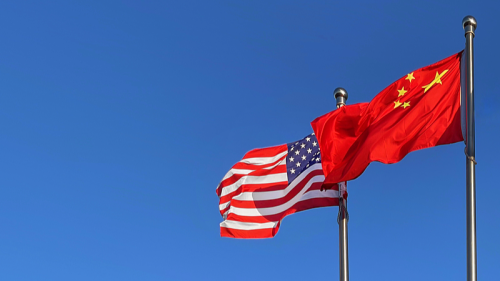
### U.S. and China Agree to Lower Tariffs on $60 Billion in Goods
The United States and China have reached an arrangement to reduce tariffs on roughly $60 billion worth of goods, signaling a move toward easing trade tensions after a meeting between U.S. President Donald Trump and Chinese President Xi Jinping.
Under the arrangement, each country has identified approximately $30 billion in goods that could receive lower tariff treatment. The measures primarily target non-sensitive products, while strategically important industries remain outside much of the agreement. The two governments have not yet provided a specific date for when the reduced tariffs will take effect.
The U.S. list includes 1,619 product lines covering a broad range of goods, including agricultural products, meat, seafood, cosmetics, medical equipment, dairy products and grains. China’s list covers 77 categories of U.S. products, ranging from fireworks and microwave ovens to fishhooks, toys, tableware, holiday decorations, household goods and small appliances.
The White House also said China has committed to purchasing at least 10 million metric tons of U.S. coal in each of 2027 and 2028, adding an energy component to the broader trade arrangement.
The agreement will be supported by the U.S.-China Board of Trade, a government-to-government body established in May to address trade in non-sensitive goods. The board includes officials from both countries and is expected to hold meetings at least once every quarter.
U.S. Trade Representative Ambassador Jamieson Greer said the Trump administration would continue working toward what it described as fair, balanced and reciprocal trade with China. He said the focus would include monitoring agricultural and energy purchase commitments, expanding balanced trade in non-sensitive products and improving market access for U.S. businesses and workers.
The latest measures follow a period in which Washington and Beijing imposed tariffs exceeding 40% on some products from each other. Under an extended trade truce, overall tariff rates remain around 30% on Chinese imports entering the United States and about 10% on U.S. goods entering China.
The new arrangement would remove certain country-specific surcharges and bring tariffs on more than 90% of the covered products down to most-favored-nation levels. The changes are therefore expected to affect a wide range of consumer and commercial products without altering the broader tariff structure between the two economies.
China’s Commerce Ministry said the arrangement would help stabilize bilateral trade and improve conditions for Chinese exports to the U.S. Beijing also said the agreement could support greater cooperation in agriculture, energy, manufacturing and consumer goods.
Despite the announcement, the agreement represents only one portion of the much larger U.S.-China economic relationship. The U.S. goods trade deficit with China stood at approximately $295 billion in 2024, highlighting the scale of the trade imbalance compared with the $60 billion covered by the latest arrangement.
Deborah Elms, a trade policy analyst at the Hinrich Foundation, said the package represents only part of the broader trade relationship between the world's two largest economies.
The two governments are also establishing a communication channel for exchanging information about AI-related incidents. The initiative comes as Washington and Beijing compete for leadership in artificial intelligence while seeking to manage potential risks associated with increasingly advanced AI systems.
The latest trade measures therefore combine limited tariff relief with continued negotiations over agriculture, energy, technology and market access. While the arrangement could reduce duties on thousands of products, significant differences remain between the two countries on trade and strategic economic issues.
Trump and Xi are expected to continue discussions at upcoming international meetings, including the Asia-Pacific Economic Cooperation summit in Shenzhen and the G20 summit in Florida in December. Further negotiations could determine whether the latest tariff reductions develop into a broader restructuring of U.S.-China trade relations.
The United States and China have reached an arrangement to reduce tariffs on roughly $60 billion worth of goods, signaling a move toward easing trade tensions after a meeting between U.S. President Donald Trump and Chinese President Xi Jinping.
Under the arrangement, each country has identified approximately $30 billion in goods that could receive lower tariff treatment. The measures primarily target non-sensitive products, while strategically important industries remain outside much of the agreement. The two governments have not yet provided a specific date for when the reduced tariffs will take effect.
The U.S. list includes 1,619 product lines covering a broad range of goods, including agricultural products, meat, seafood, cosmetics, medical equipment, dairy products and grains. China’s list covers 77 categories of U.S. products, ranging from fireworks and microwave ovens to fishhooks, toys, tableware, holiday decorations, household goods and small appliances.
The White House also said China has committed to purchasing at least 10 million metric tons of U.S. coal in each of 2027 and 2028, adding an energy component to the broader trade arrangement.
The agreement will be supported by the U.S.-China Board of Trade, a government-to-government body established in May to address trade in non-sensitive goods. The board includes officials from both countries and is expected to hold meetings at least once every quarter.
U.S. Trade Representative Ambassador Jamieson Greer said the Trump administration would continue working toward what it described as fair, balanced and reciprocal trade with China. He said the focus would include monitoring agricultural and energy purchase commitments, expanding balanced trade in non-sensitive products and improving market access for U.S. businesses and workers.
The latest measures follow a period in which Washington and Beijing imposed tariffs exceeding 40% on some products from each other. Under an extended trade truce, overall tariff rates remain around 30% on Chinese imports entering the United States and about 10% on U.S. goods entering China.
The new arrangement would remove certain country-specific surcharges and bring tariffs on more than 90% of the covered products down to most-favored-nation levels. The changes are therefore expected to affect a wide range of consumer and commercial products without altering the broader tariff structure between the two economies.
China’s Commerce Ministry said the arrangement would help stabilize bilateral trade and improve conditions for Chinese exports to the U.S. Beijing also said the agreement could support greater cooperation in agriculture, energy, manufacturing and consumer goods.
Despite the announcement, the agreement represents only one portion of the much larger U.S.-China economic relationship. The U.S. goods trade deficit with China stood at approximately $295 billion in 2024, highlighting the scale of the trade imbalance compared with the $60 billion covered by the latest arrangement.
Deborah Elms, a trade policy analyst at the Hinrich Foundation, said the package represents only part of the broader trade relationship between the world's two largest economies.
The two governments are also establishing a communication channel for exchanging information about AI-related incidents. The initiative comes as Washington and Beijing compete for leadership in artificial intelligence while seeking to manage potential risks associated with increasingly advanced AI systems.
The latest trade measures therefore combine limited tariff relief with continued negotiations over agriculture, energy, technology and market access. While the arrangement could reduce duties on thousands of products, significant differences remain between the two countries on trade and strategic economic issues.
Trump and Xi are expected to continue discussions at upcoming international meetings, including the Asia-Pacific Economic Cooperation summit in Shenzhen and the G20 summit in Florida in December. Further negotiations could determine whether the latest tariff reductions develop into a broader restructuring of U.S.-China trade relations.
Tags
news
Comments (0)
Login to post comments
No comments yet
Be the first to share your thoughts about this post.