News
General
37 views
Viral photos fuel wheelchair misuse debate on India flights
Oct 22, 2026
📍 Phliadelphia,PA, USA
# Viral Airport Wheelchair Photo Sparks Debate Over Alleged Misuse of Assistance Services
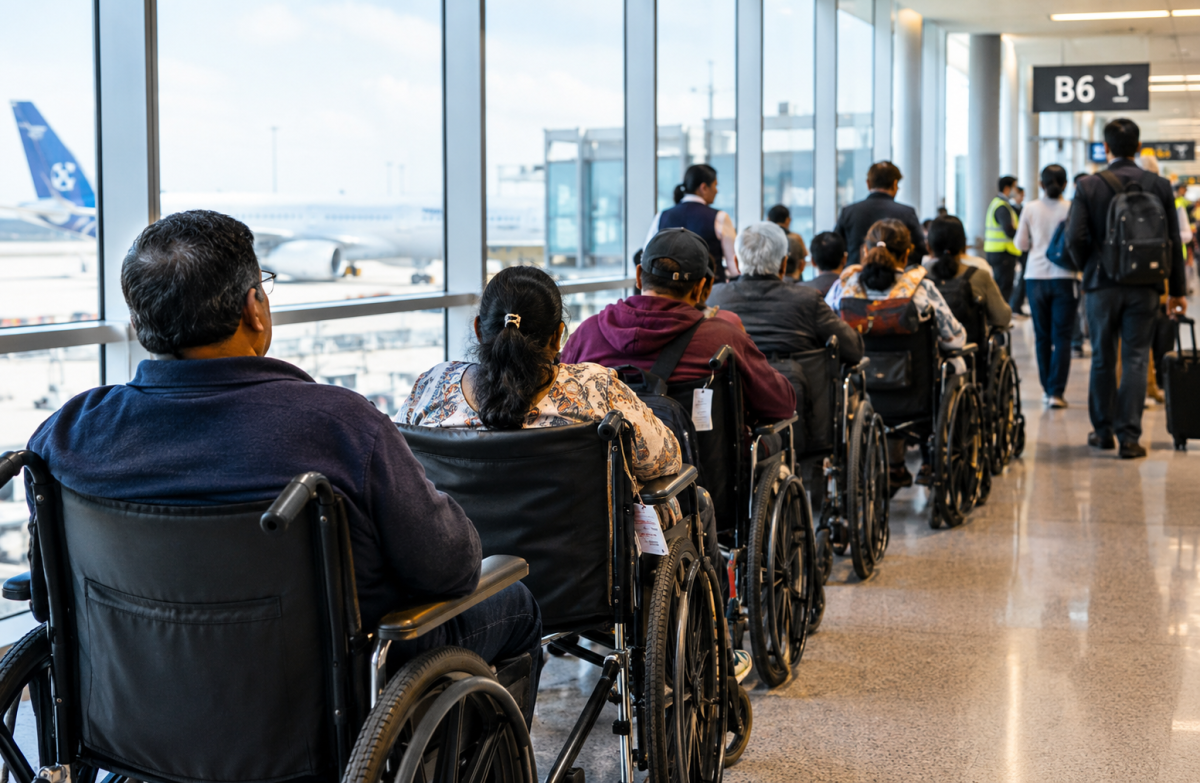
A viral photograph showing dozens of passengers seated in wheelchairs while waiting to board a flight to India has reignited debate over the use of airport mobility assistance. The image has prompted questions about whether some travelers request wheelchairs for convenience, while also highlighting the challenges airlines face in ensuring that passengers with genuine mobility needs receive timely support.
In an August 26 report titled “Are Indians Really Gaming Airport Wheelchairs?”, *The Juggernaut* examined how social media allegations have fueled scrutiny of wheelchair assistance, while emphasizing that the issue is more complex than viral images may suggest.
Written by Isha Banerjee, the report discussed a photograph posted on X on August 20 with the caption “flight to india (this is insane).” The post attracted more than 21 million views and triggered criticism of Indian travelers, with some users alleging that passengers were exploiting a service intended for people who need mobility support.
The controversy has also raised concerns about whether excessive or unnecessary requests could strain the availability of wheelchairs and trained airport staff, potentially delaying assistance for passengers who depend on the service.
**Viral claims raise questions about airport assistance**
The debate centers on allegations that some passengers who can walk independently request wheelchairs to avoid long queues, navigate large terminals more easily or receive priority boarding. These claims have circulated widely on social media, particularly in discussions about international flights connecting India and the United States.
An earlier report by *The American Bazaar*, published on November 17, 2025, examined a separate viral video showing a long line of passengers using wheelchairs at an international airport. Social media commentary surrounding that video included claims that wheelchair assistance was being overused on India-U.S. routes.
One widely circulated assertion suggested that approximately 30% of passengers on India-U.S. flights requested wheelchair assistance. The figure was attributed to Air India in online discussions, but it should not be treated as independently verified without supporting airline data.
Some social media users have called for airlines to introduce fees or stricter eligibility checks to discourage requests made purely for convenience. However, images and videos alone cannot establish whether individual passengers have disabilities or legitimate reasons for requiring assistance.
**Disabilities and mobility needs are not always visible**
A central challenge in the debate is that a person's ability to walk at a particular moment does not necessarily indicate whether they need airport assistance. Some people can walk short distances but struggle with prolonged standing, long terminal transfers, crowded spaces or the physical demands of navigating an airport.
Older travelers, passengers recovering from temporary injuries and people with medical conditions that affect mobility may also require support even if their limitations are not immediately apparent. The same applies to passengers who need help moving between terminals, reaching boarding gates or navigating unfamiliar airport environments.
The discussion has also highlighted the needs of elderly travelers who may have difficulty understanding announcements, communicating with staff or finding their way through complex terminals. Some families may arrange wheelchair assistance to help older relatives manage these challenges.
The earlier *American Bazaar* report documented differing views among social media users. While some argued that wheelchair services were being used unnecessarily, others said the assistance could help elderly family members navigate security procedures, terminal changes and baggage collection.
These explanations do not establish how widespread misuse may be. They do, however, illustrate why passengers should not be judged solely on their appearance or their ability to walk a short distance.
**Accessibility remains an essential part of air travel**
Wheelchair assistance plays an important role in making air travel accessible. When demand exceeds available resources, passengers who rely on the service may experience delays, difficulty reaching boarding gates or disruptions during transfers.
In the United States, the Department of Transportation's Airline Passengers with Disabilities Bill of Rights outlines protections under the Air Carrier Access Act. These include assistance at airports and during boarding for eligible passengers with disabilities, along with safeguards against disability-based discrimination.
The rules recognize that disability-related needs vary and that not every condition is visibly apparent. Airlines must provide appropriate assistance when required, making it important to balance concerns about service availability with the rights of passengers who need support.
For airlines and airports, the challenge is to ensure that wheelchairs and trained staff are available to passengers who depend on them while responding to concerns about requests made solely for convenience. Any effective approach would need to account for genuine mobility limitations without creating unnecessary barriers for people with disabilities.
**Reliable data needed to assess the scale of the problem**
The debate surrounding India-bound flights illustrates how quickly viral images can shape public perceptions of passenger behavior. However, a large number of people using wheelchairs in one photograph does not establish how many requests are unnecessary or whether the passengers shown have legitimate needs.
Determining the extent of any misuse would require reliable data on wheelchair requests, passenger requirements, airline policies and the availability of assistance services. Without such evidence, broad conclusions about Indian travelers or passengers on particular routes risk confusing online allegations with established facts.
The discussion ultimately highlights the need to protect accessible air travel while ensuring that limited assistance resources are managed effectively. As the controversy continues online, distinguishing verified information from speculation will be essential to understanding the issue and avoiding assumptions about passengers whose mobility needs may not be visible.
Tags
news
Comments (0)
Login to post comments
No comments yet
Be the first to share your thoughts about this post.