News
General
41 views
Audi to invest $4.2 billion in Georgia factory
Oct 26, 2026
📍 Phliadelphia,PA, USA
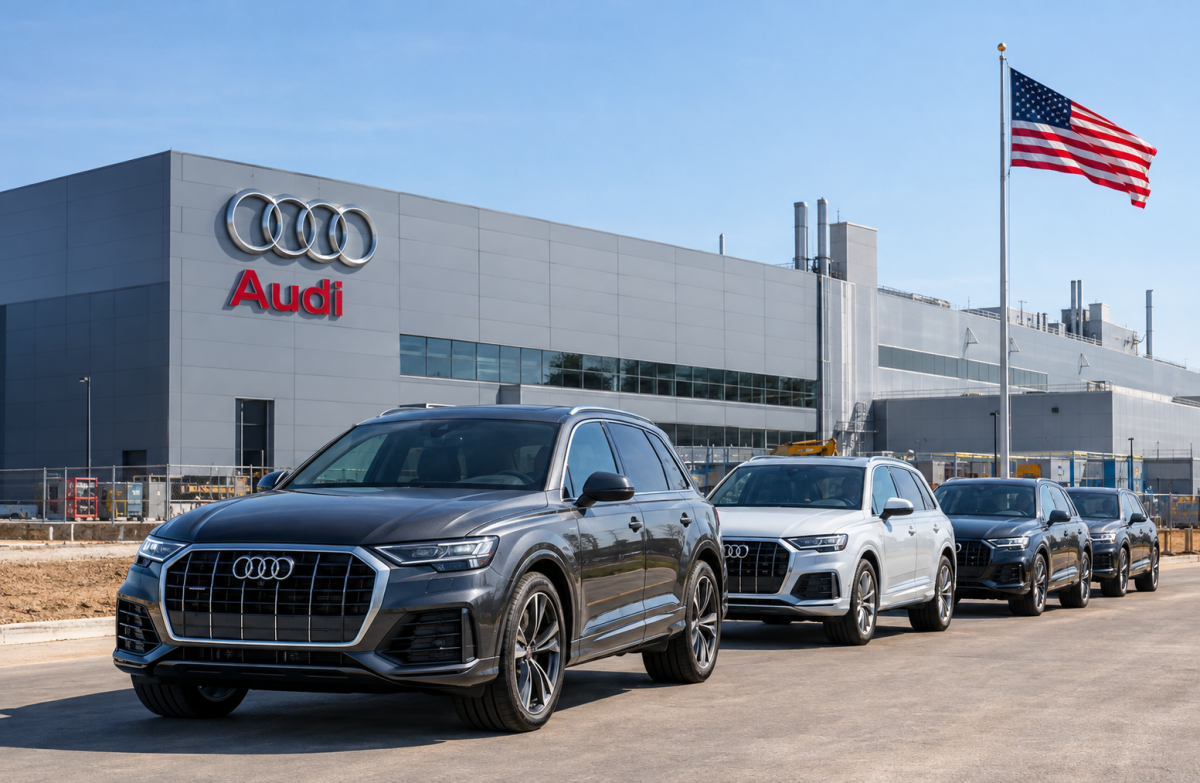
# Audi Plans $4.2 Billion Investment in First U.S. Vehicle Assembly Plant in Georgia
German luxury automaker Audi plans to invest $4.2 billion in its first U.S. vehicle assembly plant in Georgia, a project expected to produce 200,000 sport utility vehicles annually and create approximately 4,500 jobs.
President Donald Trump announced the proposed investment at a campaign rally in Perry, Georgia, on Oct. 24. The factory is planned for an area near Macon and is expected to manufacture some of Audi’s largest and most premium SUVs for the North American market.
According to Reuters and LiveMint, construction is scheduled to begin in 2027, with vehicle production expected to start in the early 2030s. The investment amounts to approximately ₹37,000 crore, marking a major expansion of the German automaker’s presence in the United States.
Audi CEO Gernot Döllner described the project as a long-term commitment to the American market, emphasizing the company’s plans to manufacture its largest and most premium SUVs at the Georgia facility.
“This is a long-term investment because we believe in the American market,” Döllner said at the announcement, according to Reuters.
### Audi Plans to Produce Q7, Q8 and Q9 SUVs
The proposed factory is expected to assemble the Audi Q7, Q8 and Q9 SUVs, according to a U.S. official cited by Reuters. The facility would establish Audi’s first vehicle manufacturing operation in the country.
Audi operates as a premium automotive subsidiary of Volkswagen Group, which owns several vehicle brands. Currently, Audi imports the vehicles it sells in the United States from manufacturing facilities in Europe and Mexico.
Establishing domestic production would expand Audi’s North American manufacturing footprint and reduce its reliance on imported vehicles for the U.S. market. It would also provide the company with a dedicated production base closer to American customers.
The investment comes as Audi faces mounting competitive and financial pressures. Competition in China has intensified, while U.S. import tariffs have added to the costs of selling vehicles in the American market.
Reuters reported that Audi’s global sales declined 7% in the first half of 2026, while its U.S. sales fell 16%. The company also incurred approximately €1.2 billion, or $1.4 billion, in costs from U.S. tariffs last year, according to Reuters.
### Trump Attributes Investment to Tariff Policies
Trump presented Audi’s planned factory as evidence that his trade policies are encouraging automakers to shift more manufacturing to the United States.
His administration has imposed tariffs on imported automobiles, steel, aluminum and automotive components while pressing companies to expand domestic production.
Republican Sen. Bernie Moreno of Ohio also credited tariffs and regulatory changes for the proposed investment. Critics, however, argue that import duties can raise vehicle prices and create uncertainty for companies making long-term investment decisions.
The announcement comes ahead of the Nov. 3 midterm elections, with Georgia among the states facing competitive congressional and statewide contests. Domestic manufacturing and tariff policies have remained prominent themes in Trump’s economic messaging.
### Other Automakers Expand U.S. Production
Audi’s proposed investment comes amid broader efforts by international automakers to expand or strengthen their manufacturing operations in the United States.
Toyota announced in July 2026 that it would invest $3.6 billion in a truck assembly facility at its manufacturing campus in San Antonio, Texas. The project is expected to create approximately 2,000 jobs, with completion targeted for 2030.
Other automakers have highlighted uncertainties surrounding trade policy. Honda has raised concerns about the business environment, while Hyundai has indicated that greater clarity over the future of the U.S.-Mexico-Canada Agreement could influence further investment decisions.
For Audi, the Georgia project represents a substantial shift in its U.S. manufacturing strategy. If completed as planned, the facility would provide domestic production capacity for high-end SUVs while creating thousands of jobs.
The company must still move through construction and production preparations before the factory can begin operations in the early 2030s. Its eventual impact will depend on the project’s execution, market demand and the evolving trade environment.
Tags
news
Comments (0)
Login to post comments
No comments yet
Be the first to share your thoughts about this post.