News
General
23 views
Jain Indian American Amish Shah close to making history in Arizona Congressional race
Nov 05, 2026
📍 Phliadelphia,PA, USA
# Amish Shah Nears Historic Congressional Victory in Arizona, Highlighting Indian American Representation
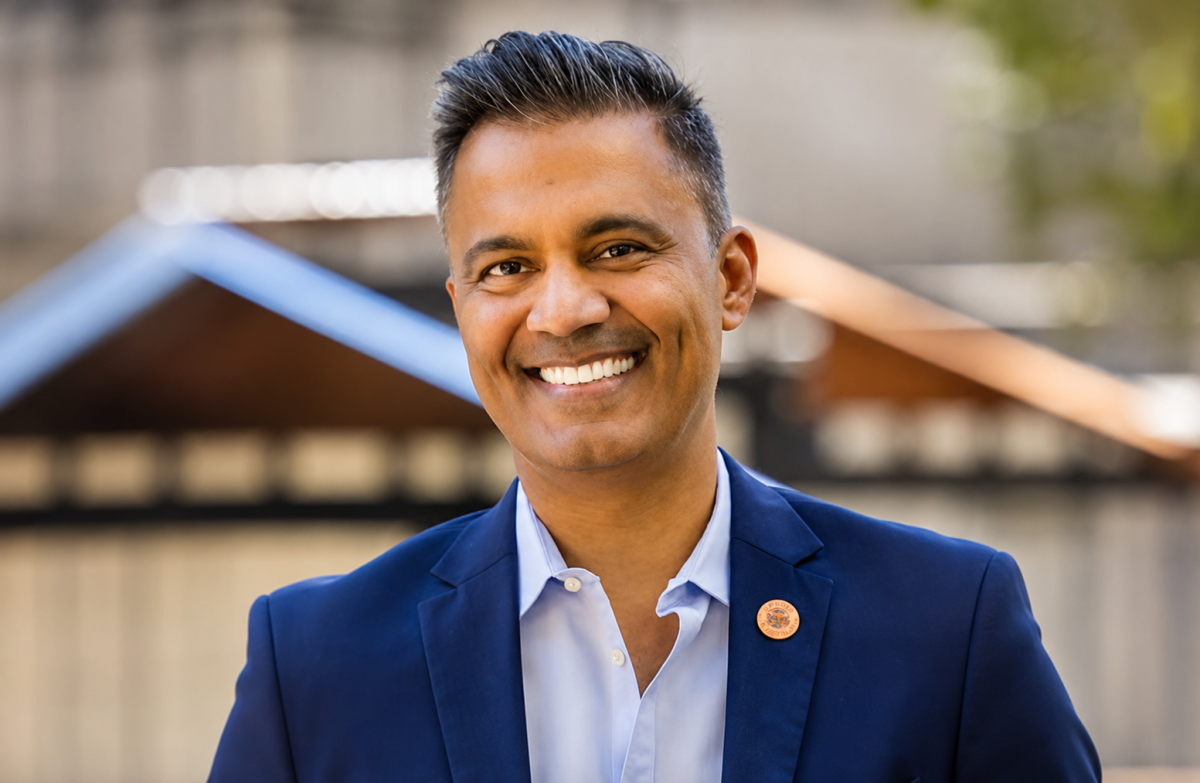
Indian American Democrat Amish Shah was moving closer to a potentially historic victory in Arizona's 1st Congressional District as early results from the November 3, 2026, midterm elections showed him leading Republican opponent Jay Feely. The contest has attracted considerable attention because a victory would make Shah the first Indian American to represent Arizona in the U.S. Congress.
According to Associated Press results cited in the available election data, Shah had secured 52.57% of the vote, equivalent to 163,584 ballots, as counting continued. His lead placed him in a strong position in the closely watched race, although the final outcome remained dependent on the completion of vote counting.
Shah, an emergency medicine physician and former three-term member of the Arizona House of Representatives, is competing against Feely, a former NFL placekicker who later worked as a sports broadcaster. The candidates are contesting the seat previously represented by Republican David Schweikert. The election is also part of the wider political struggle as Democrats attempt to increase their representation in the U.S. House of Representatives.
**Jain Heritage Shapes Shah's Personal and Public Outlook**
Beyond his political ambitions, Shah's background and connection to Jain philosophy have become important aspects of his public identity. His father, Satish Shah, follows Jainism, an Indian religious tradition that places importance on nonviolence, compassion and respect for different perspectives.
Born and raised in Chicago to parents who immigrated from Gujarat, India, Shah grew up surrounded by both Indian cultural traditions and American influences. His mother follows Hinduism, while his childhood education took place in Catholic schools. This exposure to different cultural and religious environments contributed to his understanding of diverse communities.
Two central Jain concepts, Anekantavada and Ahimsa, have particular significance in Shah's outlook. Anekantavada teaches that truth can be understood from multiple perspectives and encourages individuals to consider viewpoints different from their own. Shah has related this philosophy to his approach to politics, emphasising the importance of listening to people with opposing opinions and identifying areas of agreement.
Ahimsa, another fundamental Jain principle, promotes nonviolence and avoiding harm to living beings. Shah's vegetarian lifestyle and interest in animal welfare reflect this influence. He also established the Arizona Vegetarian Food Festival to encourage plant-based eating and introduce people to vegetarian food choices.
Shah speaks Gujarati and has continued to maintain a connection with his Indian heritage while developing his professional career in the United States. His educational background includes undergraduate and medical degrees from Northwestern University, along with a Master of Public Health from the University of California, Berkeley. He is also a licensed pilot and has used his flying experience to support underserved communities.
**Healthcare and Affordability at the Centre of Campaign**
Healthcare access and the rising cost of living have been among the major issues shaping Shah's campaign. Drawing on his experience as an emergency medicine physician, he has called for reducing health insurance premiums and prescription drug expenses while protecting essential programmes such as Medicare, Medicaid and Social Security.
Shah has also expressed support for abortion rights and protections for individuals under the Deferred Action for Childhood Arrivals programme, commonly known as DACA. On economic policy, he has criticised tariffs introduced during Trump's presidency, arguing that higher trade costs can place additional financial pressure on American households.
Environmental and infrastructure concerns have also featured in his campaign. Shah has raised questions about the increasing water and electricity requirements of data centres in Arizona, highlighting the need to consider the impact of expanding technology infrastructure on local resources.
His campaign has presented healthcare, household affordability, environmental responsibility and cooperation across political differences as key priorities. These issues have helped distinguish his approach in a competitive suburban congressional district.
**Shah and Feely Present Different Political Messages**
During the campaign, Republican candidate Jay Feely attempted to portray Shah as too liberal, referring to his previous positive comments about Senator Bernie Sanders and his positions on healthcare policy.
Shah, in turn, criticised Feely's association with President Donald Trump. He argued that continued Republican support for the administration's policies could increase the financial difficulties experienced by American families.
The candidates therefore offered contrasting approaches to national political issues, with healthcare and economic affordability emerging as important areas of disagreement. Shah also highlighted bipartisan cooperation, presenting himself as someone willing to engage with people across the political spectrum rather than focus exclusively on party differences.
His emphasis on listening to opposing viewpoints closely reflects the Jain principle of Anekantavada, which recognises that different perspectives can contribute to a broader understanding of complex issues.
**Potential Milestone for Indian Americans**
With Shah ahead in the reported vote count, the Arizona contest has become particularly significant for Indian Americans following the midterm elections. If the result is confirmed in his favour, he would make history as the first Indian American elected to represent Arizona in the U.S. Congress.
His potential victory would also bring attention to the growing participation of Indian American candidates in American politics. Shah's journey from a family with roots in Gujarat to a career in medicine and public service reflects the intersection of immigrant heritage and political representation in the United States.
As the remaining ballots are counted, the outcome of the race remains important not only for Arizona's political representation but also for the wider Indian American community. Shah's candidacy has brought his professional experience, Jain family heritage and policy priorities into the national spotlight.
Tags
news
Comments (0)
Login to post comments
No comments yet
Be the first to share your thoughts about this post.