News
General
⭐ Featured
72 views
Midwest’s 10.7% immigrant labor share raises alarm for manufacturing and healthcare industries
May 21, 2026
📍 Philadelphia, PA, USA
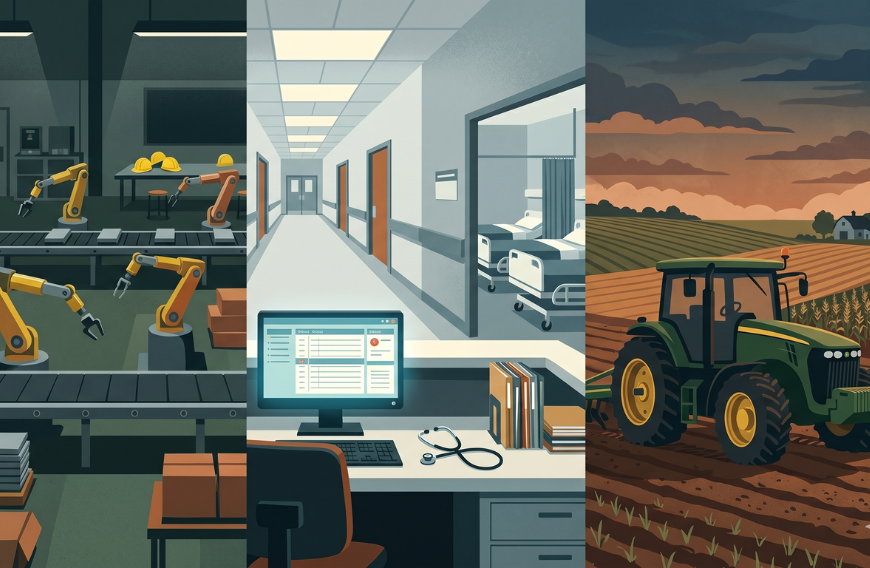
🇺🇸📉 A new labor study is raising concerns about a growing workforce crisis across the American Midwest, where immigrant workers make up a significantly smaller share of the labor force compared to every other region in the country. Researchers warn that the imbalance could create serious long-term economic pressure for industries already struggling with worker shortages, including manufacturing, healthcare, agriculture, warehousing, and food processing.
The report, released by the Law Offices of James A. Welcome using 2024 U.S. Bureau of Labor Statistics data, found that foreign-born workers account for only **10.7%** of the Midwest labor force — the lowest percentage among all major U.S. regions and less than half the immigrant workforce share seen in the American West. The Midwest currently employs about **3.8 million immigrant workers**, while regions like the West and Northeast rely far more heavily on foreign-born labor to support economic growth and fill essential jobs.
Researchers said the findings reveal a deeper structural challenge that has slowly developed over decades. While coastal states and major metropolitan regions built strong immigrant labor pipelines through long-standing migration patterns, industrial growth, and international economic connections, much of the Midwest never developed the same large-scale foreign-born workforce networks. As a result, employers across Midwestern states are increasingly struggling to recruit enough workers for industries that traditionally depend on labor-intensive operations.
The report showed that the West remains the most immigrant-dependent region in the country, with nearly **24.4%** of workers being foreign-born. States including California, Nevada, and Washington have spent decades building industries heavily supported by immigrant labor across technology, healthcare, construction, hospitality, and agriculture. Researchers said immigrant communities have become deeply tied to the region’s economic growth and workforce stability.
The Northeast ranked second, with immigrants representing **22.7%** of the labor force. Major urban centers such as New York City, Boston, and Hartford continue attracting large foreign-born populations that support hospitals, universities, finance, transportation, and construction sectors. The South, meanwhile, recorded the largest total number of immigrant workers in the country at more than **12 million**, accounting for roughly **19%** of the region’s workforce. Expanding economies in states like Texas, Florida, and Georgia have fueled rising demand for labor across construction, agriculture, logistics, and hospitality industries.
Researchers described the Midwest as the clear outlier. Despite being home to massive manufacturing plants, meatpacking operations, farms, warehouses, and healthcare systems that require large labor pools, the region continues operating with far fewer immigrant workers than competing regions. The report argued this represents a long-term structural weakness rather than a temporary economic slowdown.
“The Midwest never built the immigrant labor pipeline that every other region did,” the study stated. Researchers explained that migration patterns historically favored coastal cities and international trade hubs, leaving many Midwestern communities with smaller immigrant populations and weaker labor replacement networks over time.
The study also warned that stricter federal immigration enforcement and tighter labor supply conditions could worsen staffing shortages across the region. Industries already facing recruitment difficulties may struggle even more if available labor pools shrink further. Researchers argued that the Midwest currently lacks a large enough domestic workforce pipeline to quickly replace workers in sectors already dealing with severe staffing pressure.
Healthcare systems in rural Midwestern communities were identified as a particularly vulnerable area. Hospitals, nursing facilities, and long-term care providers continue facing major worker shortages while struggling to recruit enough nurses, caregivers, technicians, and support staff. Agriculture and manufacturing employers are also facing increasing competition for labor as demographic shifts, retirements, and declining population growth affect many smaller communities.
The report suggests that immigration policy is becoming increasingly connected to broader economic concerns involving production capacity, workforce stability, inflation, healthcare access, and long-term regional growth. Analysts say the findings highlight how immigration debates are no longer limited to border policy or political rhetoric but are now deeply tied to labor market sustainability and the future competitiveness of entire industries across the United States. 🌎🏭
The report, released by the Law Offices of James A. Welcome using 2024 U.S. Bureau of Labor Statistics data, found that foreign-born workers account for only **10.7%** of the Midwest labor force — the lowest percentage among all major U.S. regions and less than half the immigrant workforce share seen in the American West. The Midwest currently employs about **3.8 million immigrant workers**, while regions like the West and Northeast rely far more heavily on foreign-born labor to support economic growth and fill essential jobs.
Researchers said the findings reveal a deeper structural challenge that has slowly developed over decades. While coastal states and major metropolitan regions built strong immigrant labor pipelines through long-standing migration patterns, industrial growth, and international economic connections, much of the Midwest never developed the same large-scale foreign-born workforce networks. As a result, employers across Midwestern states are increasingly struggling to recruit enough workers for industries that traditionally depend on labor-intensive operations.
The report showed that the West remains the most immigrant-dependent region in the country, with nearly **24.4%** of workers being foreign-born. States including California, Nevada, and Washington have spent decades building industries heavily supported by immigrant labor across technology, healthcare, construction, hospitality, and agriculture. Researchers said immigrant communities have become deeply tied to the region’s economic growth and workforce stability.
The Northeast ranked second, with immigrants representing **22.7%** of the labor force. Major urban centers such as New York City, Boston, and Hartford continue attracting large foreign-born populations that support hospitals, universities, finance, transportation, and construction sectors. The South, meanwhile, recorded the largest total number of immigrant workers in the country at more than **12 million**, accounting for roughly **19%** of the region’s workforce. Expanding economies in states like Texas, Florida, and Georgia have fueled rising demand for labor across construction, agriculture, logistics, and hospitality industries.
Researchers described the Midwest as the clear outlier. Despite being home to massive manufacturing plants, meatpacking operations, farms, warehouses, and healthcare systems that require large labor pools, the region continues operating with far fewer immigrant workers than competing regions. The report argued this represents a long-term structural weakness rather than a temporary economic slowdown.
“The Midwest never built the immigrant labor pipeline that every other region did,” the study stated. Researchers explained that migration patterns historically favored coastal cities and international trade hubs, leaving many Midwestern communities with smaller immigrant populations and weaker labor replacement networks over time.
The study also warned that stricter federal immigration enforcement and tighter labor supply conditions could worsen staffing shortages across the region. Industries already facing recruitment difficulties may struggle even more if available labor pools shrink further. Researchers argued that the Midwest currently lacks a large enough domestic workforce pipeline to quickly replace workers in sectors already dealing with severe staffing pressure.
Healthcare systems in rural Midwestern communities were identified as a particularly vulnerable area. Hospitals, nursing facilities, and long-term care providers continue facing major worker shortages while struggling to recruit enough nurses, caregivers, technicians, and support staff. Agriculture and manufacturing employers are also facing increasing competition for labor as demographic shifts, retirements, and declining population growth affect many smaller communities.
The report suggests that immigration policy is becoming increasingly connected to broader economic concerns involving production capacity, workforce stability, inflation, healthcare access, and long-term regional growth. Analysts say the findings highlight how immigration debates are no longer limited to border policy or political rhetoric but are now deeply tied to labor market sustainability and the future competitiveness of entire industries across the United States. 🌎🏭
Tags
news
Comments (0)
Login to post comments
No comments yet
Be the first to share your thoughts about this post.