News
General
⭐ Featured
68 views
Abandoned oil wells could power AI data centers as energy storage systems
May 21, 2026
📍 Philadelphia, PA, USA
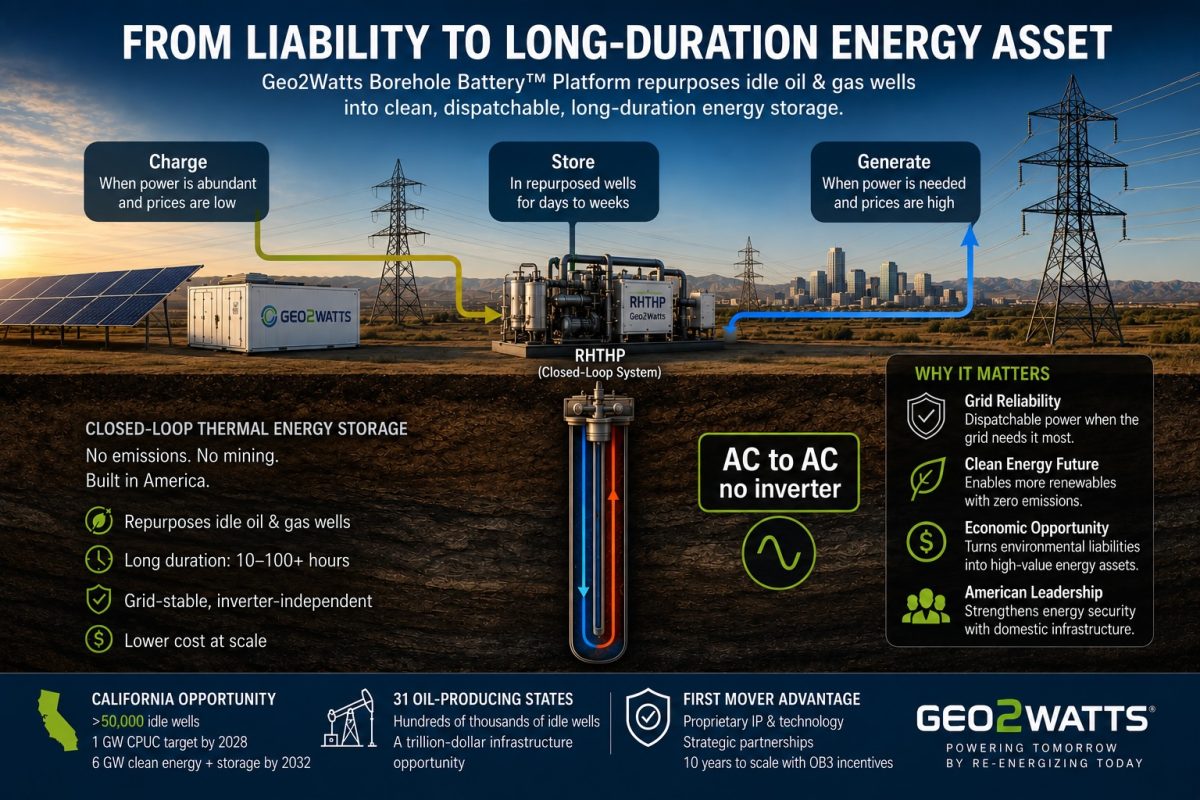
⚡🛢️ Abandoned oil wells are being reimagined as one of the next major solutions for the global AI and clean-energy boom, as rising electricity demand from artificial intelligence data centers pushes governments and utilities to search for long-duration energy storage systems capable of stabilizing increasingly stressed electric grids.
A growing body of research is now pointing toward a surprising answer: old oil and gas infrastructure. A recent analysis titled *“The Borehole Battery: From Liability to Long Duration Storage Asset”* by energy researcher Gilles Chaspierre argues that idle oil wells could become valuable clean-energy assets instead of costly environmental liabilities.
At the center of this push is California-based company Geo2Watts (G2W), which is developing its Borehole Battery™ Platform (BBP) — a system that repurposes abandoned oil and gas wells into underground thermal energy storage facilities capable of generating dispatchable electricity during periods of high demand. Unlike traditional lithium-ion batteries, the technology focuses on thermal energy storage and synchronous power generation designed to provide more stable grid support.
The timing is significant. Utilities across California and the broader United States are facing growing pressure from the rapid expansion of AI infrastructure, data centers, electric vehicles, renewable energy integration, and aging transmission systems. AI-focused cloud computing facilities alone are expected to consume enormous amounts of electricity over the next decade as companies race to train and operate increasingly powerful generative AI models.
Industry experts warn that existing short-duration battery systems may not be enough to support a fully electrified and AI-driven economy. California already faces evening power shortages, wildfire-related outages, renewable energy intermittency, and major grid congestion challenges. Policymakers are now aggressively searching for long-duration storage technologies capable of delivering electricity reliably for extended periods.
Geo2Watts argues its Borehole Battery™ Platform offers a unique advantage because it uses existing oilfield infrastructure already connected to the grid. According to the company, roughly one million idle or underperforming oil and gas wells across the United States could eventually be converted into storage assets, including more than 50,000 wells in California alone.
The economics behind the concept are attracting increasing attention from investors and policymakers. Federal clean-energy incentives under the Inflation Reduction Act and other proposed energy legislation could allow projects to qualify for investment tax credits worth up to 50%, while also benefiting from premium electricity pricing during California’s peak evening demand hours.
Supporters say the technology could address several major national challenges simultaneously — reducing environmental liabilities tied to abandoned wells, strengthening grid resilience, supporting renewable energy growth, preserving industrial infrastructure, and creating new economic opportunities in oil-producing regions facing long-term energy transition pressures.
The broader conversation also reflects growing anxiety surrounding the future energy demands of artificial intelligence itself. Data centers powering AI systems require massive amounts of electricity and cooling capacity, pushing utilities and governments to rethink how future energy infrastructure will be built. Tech companies worldwide are now investing heavily in nuclear power, renewable energy, battery systems, and alternative grid technologies to prepare for the expected surge in AI-related electricity consumption.
Geo2Watts remains one of the few companies specifically focused on converting legacy oil infrastructure into thermal energy storage systems, giving it what analysts describe as a potential first-mover advantage in a rapidly emerging sector. The company says its technology is supported by patent-pending thermal engineering systems, real-time digital controls, and partnerships involving research institutions such as Savannah River National Laboratory and the Colorado School of Mines.
As California moves toward some of the most aggressive long-duration energy storage mandates in the United States, abandoned oil wells once seen purely as environmental liabilities may soon become part of the next generation of AI-era energy infrastructure. The growing push to transform aging fossil fuel assets into clean-energy systems also highlights how the global energy transition is increasingly being shaped not just by renewable generation, but by the urgent need for scalable energy storage capable of powering the AI economy of the future. 🌍🔋
A growing body of research is now pointing toward a surprising answer: old oil and gas infrastructure. A recent analysis titled *“The Borehole Battery: From Liability to Long Duration Storage Asset”* by energy researcher Gilles Chaspierre argues that idle oil wells could become valuable clean-energy assets instead of costly environmental liabilities.
At the center of this push is California-based company Geo2Watts (G2W), which is developing its Borehole Battery™ Platform (BBP) — a system that repurposes abandoned oil and gas wells into underground thermal energy storage facilities capable of generating dispatchable electricity during periods of high demand. Unlike traditional lithium-ion batteries, the technology focuses on thermal energy storage and synchronous power generation designed to provide more stable grid support.
The timing is significant. Utilities across California and the broader United States are facing growing pressure from the rapid expansion of AI infrastructure, data centers, electric vehicles, renewable energy integration, and aging transmission systems. AI-focused cloud computing facilities alone are expected to consume enormous amounts of electricity over the next decade as companies race to train and operate increasingly powerful generative AI models.
Industry experts warn that existing short-duration battery systems may not be enough to support a fully electrified and AI-driven economy. California already faces evening power shortages, wildfire-related outages, renewable energy intermittency, and major grid congestion challenges. Policymakers are now aggressively searching for long-duration storage technologies capable of delivering electricity reliably for extended periods.
Geo2Watts argues its Borehole Battery™ Platform offers a unique advantage because it uses existing oilfield infrastructure already connected to the grid. According to the company, roughly one million idle or underperforming oil and gas wells across the United States could eventually be converted into storage assets, including more than 50,000 wells in California alone.
The economics behind the concept are attracting increasing attention from investors and policymakers. Federal clean-energy incentives under the Inflation Reduction Act and other proposed energy legislation could allow projects to qualify for investment tax credits worth up to 50%, while also benefiting from premium electricity pricing during California’s peak evening demand hours.
Supporters say the technology could address several major national challenges simultaneously — reducing environmental liabilities tied to abandoned wells, strengthening grid resilience, supporting renewable energy growth, preserving industrial infrastructure, and creating new economic opportunities in oil-producing regions facing long-term energy transition pressures.
The broader conversation also reflects growing anxiety surrounding the future energy demands of artificial intelligence itself. Data centers powering AI systems require massive amounts of electricity and cooling capacity, pushing utilities and governments to rethink how future energy infrastructure will be built. Tech companies worldwide are now investing heavily in nuclear power, renewable energy, battery systems, and alternative grid technologies to prepare for the expected surge in AI-related electricity consumption.
Geo2Watts remains one of the few companies specifically focused on converting legacy oil infrastructure into thermal energy storage systems, giving it what analysts describe as a potential first-mover advantage in a rapidly emerging sector. The company says its technology is supported by patent-pending thermal engineering systems, real-time digital controls, and partnerships involving research institutions such as Savannah River National Laboratory and the Colorado School of Mines.
As California moves toward some of the most aggressive long-duration energy storage mandates in the United States, abandoned oil wells once seen purely as environmental liabilities may soon become part of the next generation of AI-era energy infrastructure. The growing push to transform aging fossil fuel assets into clean-energy systems also highlights how the global energy transition is increasingly being shaped not just by renewable generation, but by the urgent need for scalable energy storage capable of powering the AI economy of the future. 🌍🔋
Tags
news
Comments (0)
Login to post comments
No comments yet
Be the first to share your thoughts about this post.