News
General
⭐ Featured
112 views
Crony capitalism didn’t start with Modi- But it has never looked like this
May 25, 2026
📍 Philadelphia, PA, USA
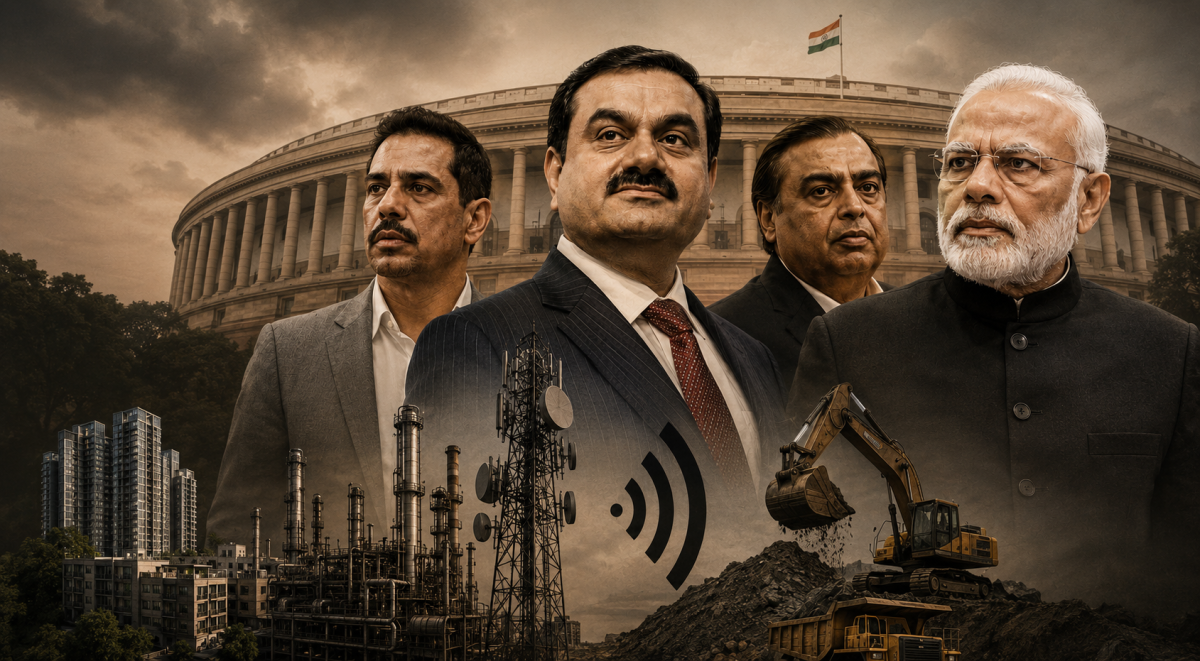
🏛️🇮🇳 The growing debate around Gautam Adani and Prime Minister Narendra Modi is no longer just about corruption or crony capitalism — critics say it has evolved into a much larger question about the concentration of economic power, political influence, and the relationship between private wealth and the Indian state itself.
Supporters of the BJP often argue that India’s political-business nexus did not begin under Modi. Congress governments were repeatedly accused of favoring powerful corporate groups through scandals involving coal allocations, telecom spectrum, land deals, gas pricing, and defense contracts. From the 2G spectrum controversy to allegations surrounding DLF, Reliance, and the KG Basin, critics across the political spectrum have long described India’s economic system as deeply intertwined with political power.
But analysts arguing that the Modi-Adani relationship is fundamentally different point to three major factors: the scale of concentration, the speed of Adani’s rise, and the increasing perception that state institutions and even foreign policy priorities appear aligned with protecting one conglomerate’s global interests.
Over the past decade, Adani Group expanded rapidly from a Gujarat-based infrastructure player into one of India’s most powerful business empires, gaining control across ports, airports, power distribution, defense, logistics, media, renewable energy, and data infrastructure. Critics say the consolidation of strategic national assets under one corporate group is historically unusual even by Indian standards of state-linked capitalism.
The controversy intensified globally after U.S. prosecutors accused Adani-linked entities of involvement in alleged bribery tied to solar energy contracts — allegations the group has strongly denied. Questions also resurfaced following investigations by Hindenburg Research and OCCRP, which alleged the use of offshore entities connected to Adani associates to support stock valuations and maintain hidden promoter influence. Adani Group has repeatedly rejected wrongdoing and described many accusations as politically motivated attacks on India’s economic rise.
Opposition leaders including Rahul Gandhi have increasingly framed the issue as one involving institutional independence, regulatory oversight, and democratic accountability. Critics argue agencies such as SEBI, state-owned financial institutions, and investigative bodies have appeared reluctant to aggressively challenge the Adani empire despite mounting scrutiny.
At the same time, BJP supporters argue that Adani’s growth reflects India’s infrastructure expansion and global ambitions, not corruption. They point out that major industrialists have historically benefited under every Indian government and accuse opposition parties of selectively targeting Adani for political reasons while ignoring earlier Congress-era corporate favoritism.
The broader national debate now extends far beyond one businessman. It touches on whether India’s economic future will be driven by broad-based competitive capitalism or by increasingly concentrated corporate power closely aligned with political leadership. For critics, the concern is not simply corruption — it is the fear that the boundaries between state power and private corporate influence may be becoming increasingly blurred in modern India. 🌍⚖️
Supporters of the BJP often argue that India’s political-business nexus did not begin under Modi. Congress governments were repeatedly accused of favoring powerful corporate groups through scandals involving coal allocations, telecom spectrum, land deals, gas pricing, and defense contracts. From the 2G spectrum controversy to allegations surrounding DLF, Reliance, and the KG Basin, critics across the political spectrum have long described India’s economic system as deeply intertwined with political power.
But analysts arguing that the Modi-Adani relationship is fundamentally different point to three major factors: the scale of concentration, the speed of Adani’s rise, and the increasing perception that state institutions and even foreign policy priorities appear aligned with protecting one conglomerate’s global interests.
Over the past decade, Adani Group expanded rapidly from a Gujarat-based infrastructure player into one of India’s most powerful business empires, gaining control across ports, airports, power distribution, defense, logistics, media, renewable energy, and data infrastructure. Critics say the consolidation of strategic national assets under one corporate group is historically unusual even by Indian standards of state-linked capitalism.
The controversy intensified globally after U.S. prosecutors accused Adani-linked entities of involvement in alleged bribery tied to solar energy contracts — allegations the group has strongly denied. Questions also resurfaced following investigations by Hindenburg Research and OCCRP, which alleged the use of offshore entities connected to Adani associates to support stock valuations and maintain hidden promoter influence. Adani Group has repeatedly rejected wrongdoing and described many accusations as politically motivated attacks on India’s economic rise.
Opposition leaders including Rahul Gandhi have increasingly framed the issue as one involving institutional independence, regulatory oversight, and democratic accountability. Critics argue agencies such as SEBI, state-owned financial institutions, and investigative bodies have appeared reluctant to aggressively challenge the Adani empire despite mounting scrutiny.
At the same time, BJP supporters argue that Adani’s growth reflects India’s infrastructure expansion and global ambitions, not corruption. They point out that major industrialists have historically benefited under every Indian government and accuse opposition parties of selectively targeting Adani for political reasons while ignoring earlier Congress-era corporate favoritism.
The broader national debate now extends far beyond one businessman. It touches on whether India’s economic future will be driven by broad-based competitive capitalism or by increasingly concentrated corporate power closely aligned with political leadership. For critics, the concern is not simply corruption — it is the fear that the boundaries between state power and private corporate influence may be becoming increasingly blurred in modern India. 🌍⚖️
Tags
news
Comments (0)
Login to post comments
No comments yet
Be the first to share your thoughts about this post.