News
General
⭐ Featured
107 views
What President Trump packed for the Beijing Trip
May 25, 2026
📍 Philadelphia, PA, USA
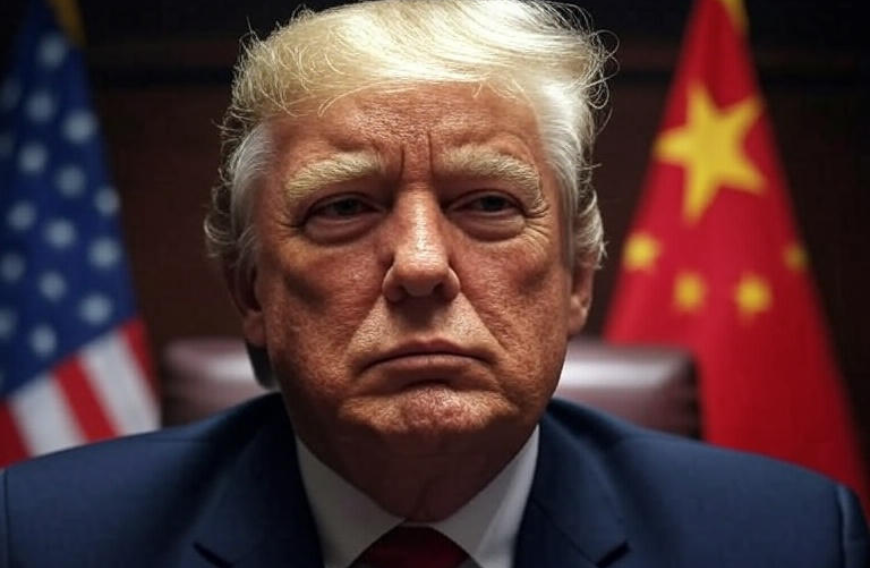
🌏✈️ President Donald Trump’s 2026 visit to Beijing became far more than a diplomatic summit — it evolved into a powerful global showcase of America’s technological, financial, and artificial intelligence ambitions in an increasingly competitive world shaped by AI, semiconductors, digital finance, and geopolitical rivalry with China.
Traveling aboard Air Force One alongside Trump was an extraordinary delegation of America’s most influential corporate leaders, including executives from Tesla, Nvidia, Apple, BlackRock, Goldman Sachs, Mastercard, Visa, Qualcomm, Boeing, and other technology and financial giants. The roster itself sent a clear message: modern American power is now increasingly defined not only by military strength or politics, but by control over artificial intelligence, semiconductor infrastructure, digital payments, and global capital markets.
At the center of the discussions was the growing AI race between the United States and China. Nvidia CEO Jensen Huang’s participation drew major attention as both countries continue battling over advanced AI chips and semiconductor dominance. The Trump administration recently approved limited exports of Nvidia H200 AI chips to selected Chinese firms under a tightly controlled licensing structure, signaling a shift from outright restriction toward strategic economic engagement.
Rare earth minerals and energy security also dominated the backdrop of the summit. China still controls the overwhelming majority of global rare earth processing, giving Beijing enormous leverage over industries powering AI systems, electric vehicles, aerospace manufacturing, and advanced defense technologies. Despite temporary trade truces and tariff reductions, tensions over supply chains and technological dependence remain unresolved.
Another major focus was the future of global finance itself. BlackRock, Mastercard, Visa, Goldman Sachs, and other financial institutions are aggressively expanding into stablecoins, blockchain infrastructure, tokenized securities, and 24/7 digital settlement systems — developments that could fundamentally reshape how money moves around the world. Analysts say the U.S. is increasingly trying to reinforce dollar dominance not only through traditional banking, but through blockchain-powered financial networks and digital payment ecosystems.
The summit highlighted a broader transformation in American diplomacy, where corporate executives, AI developers, chipmakers, and financial institutions are becoming central actors in geopolitical strategy. Instead of simply negotiating tariffs or trade balances, Washington increasingly views technological infrastructure, artificial intelligence, semiconductor access, and digital finance as core pillars of national power.
At the same time, China signaled that it intends to continue building independent alternatives across AI, semiconductors, and financial systems rather than remaining dependent on American technology. The result is a growing global competition not just over economics, but over who will control the operating systems, financial rails, intelligence infrastructure, and technological standards of the future world economy. 🌍🤖
Traveling aboard Air Force One alongside Trump was an extraordinary delegation of America’s most influential corporate leaders, including executives from Tesla, Nvidia, Apple, BlackRock, Goldman Sachs, Mastercard, Visa, Qualcomm, Boeing, and other technology and financial giants. The roster itself sent a clear message: modern American power is now increasingly defined not only by military strength or politics, but by control over artificial intelligence, semiconductor infrastructure, digital payments, and global capital markets.
At the center of the discussions was the growing AI race between the United States and China. Nvidia CEO Jensen Huang’s participation drew major attention as both countries continue battling over advanced AI chips and semiconductor dominance. The Trump administration recently approved limited exports of Nvidia H200 AI chips to selected Chinese firms under a tightly controlled licensing structure, signaling a shift from outright restriction toward strategic economic engagement.
Rare earth minerals and energy security also dominated the backdrop of the summit. China still controls the overwhelming majority of global rare earth processing, giving Beijing enormous leverage over industries powering AI systems, electric vehicles, aerospace manufacturing, and advanced defense technologies. Despite temporary trade truces and tariff reductions, tensions over supply chains and technological dependence remain unresolved.
Another major focus was the future of global finance itself. BlackRock, Mastercard, Visa, Goldman Sachs, and other financial institutions are aggressively expanding into stablecoins, blockchain infrastructure, tokenized securities, and 24/7 digital settlement systems — developments that could fundamentally reshape how money moves around the world. Analysts say the U.S. is increasingly trying to reinforce dollar dominance not only through traditional banking, but through blockchain-powered financial networks and digital payment ecosystems.
The summit highlighted a broader transformation in American diplomacy, where corporate executives, AI developers, chipmakers, and financial institutions are becoming central actors in geopolitical strategy. Instead of simply negotiating tariffs or trade balances, Washington increasingly views technological infrastructure, artificial intelligence, semiconductor access, and digital finance as core pillars of national power.
At the same time, China signaled that it intends to continue building independent alternatives across AI, semiconductors, and financial systems rather than remaining dependent on American technology. The result is a growing global competition not just over economics, but over who will control the operating systems, financial rails, intelligence infrastructure, and technological standards of the future world economy. 🌍🤖
Tags
news
Comments (0)
Login to post comments
No comments yet
Be the first to share your thoughts about this post.