News
General
⭐ Featured
110 views
Indian American bioengineer Manu Prakash recognized for microscopic life research
May 27, 2026
📍 Philadelphia, PA, USA
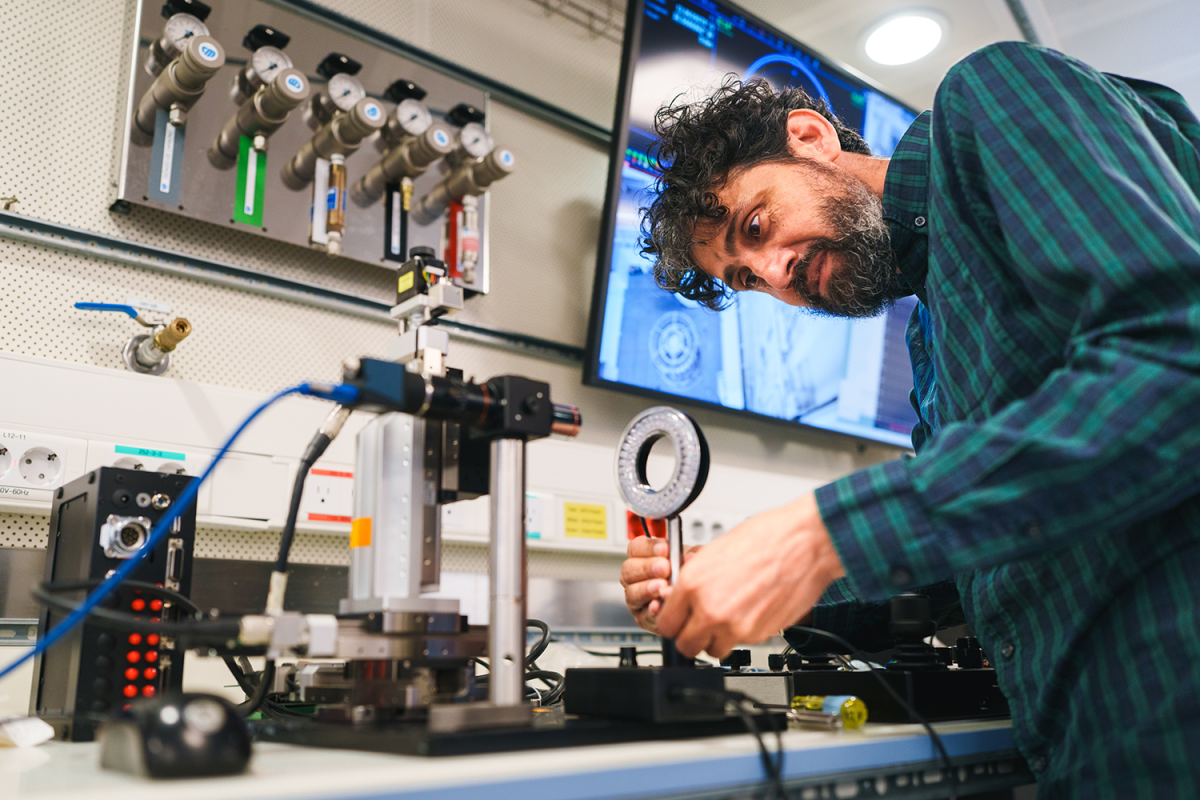
🧊🔬 Indian American Stanford bioengineer Manu Prakash and French scientist Marcel Babin have received a prestigious international research award for their groundbreaking work studying how microscopic life survives inside Arctic sea ice — research that could reshape scientific understanding of climate change, polar ecosystems, and even the possibility of life beyond Earth.
The two researchers were honored with a special $25,000 award created during celebrations marking 250 years of scientific collaboration between the United States and France. Their project, titled “Trapped in Ice,” combines bioengineering, polar ecology, physics, and advanced microscopy to explore how microorganisms survive and adapt in some of the harshest frozen environments on the planet.
Prakash, an associate professor of bioengineering at Stanford University, has become internationally known for developing low-cost scientific tools and innovative experimental systems that allow researchers to study biological processes at microscopic levels. His collaborator, Marcel Babin of France’s CNRS, brings deep expertise in polar ecology and marine microalgae research, particularly involving the formation and behavior of sea ice ecosystems.
Together, the team is investigating how microbial life becomes trapped inside growing sea ice and how these tiny organisms continue functioning despite freezing temperatures, extreme pressure, and limited nutrients. Scientists believe this research could help explain how ecosystems survive during major glaciation periods on Earth and provide clues about whether microbial life could exist on icy planets or moons elsewhere in the universe.
The project also introduces cutting-edge technologies developed by Prakash’s lab, including low-temperature microscopes and specialized “ice microfluidics” systems capable of observing biological activity inside frozen structures at unprecedented cellular resolution. Researchers say these tools may open entirely new directions in climate science, astrobiology, and environmental engineering.
The award was presented during a major scientific symposium in France titled “From the Enlightenment to AI: 250 Years of Shared Scientific Revolutions Between France and the United States,” hosted by the National Academies of Sciences of both countries. Organizers said the recognition celebrates not only scientific excellence but also the importance of international collaboration in solving global scientific challenges. 🌍❄️
The two researchers were honored with a special $25,000 award created during celebrations marking 250 years of scientific collaboration between the United States and France. Their project, titled “Trapped in Ice,” combines bioengineering, polar ecology, physics, and advanced microscopy to explore how microorganisms survive and adapt in some of the harshest frozen environments on the planet.
Prakash, an associate professor of bioengineering at Stanford University, has become internationally known for developing low-cost scientific tools and innovative experimental systems that allow researchers to study biological processes at microscopic levels. His collaborator, Marcel Babin of France’s CNRS, brings deep expertise in polar ecology and marine microalgae research, particularly involving the formation and behavior of sea ice ecosystems.
Together, the team is investigating how microbial life becomes trapped inside growing sea ice and how these tiny organisms continue functioning despite freezing temperatures, extreme pressure, and limited nutrients. Scientists believe this research could help explain how ecosystems survive during major glaciation periods on Earth and provide clues about whether microbial life could exist on icy planets or moons elsewhere in the universe.
The project also introduces cutting-edge technologies developed by Prakash’s lab, including low-temperature microscopes and specialized “ice microfluidics” systems capable of observing biological activity inside frozen structures at unprecedented cellular resolution. Researchers say these tools may open entirely new directions in climate science, astrobiology, and environmental engineering.
The award was presented during a major scientific symposium in France titled “From the Enlightenment to AI: 250 Years of Shared Scientific Revolutions Between France and the United States,” hosted by the National Academies of Sciences of both countries. Organizers said the recognition celebrates not only scientific excellence but also the importance of international collaboration in solving global scientific challenges. 🌍❄️
Tags
news
Comments (0)
Login to post comments
No comments yet
Be the first to share your thoughts about this post.