News
General
89 views
AI scribes are helping hospitals and insurers record patient conversations without your consent
Jun 03, 2026
📍 Philadelphia, PA, USA
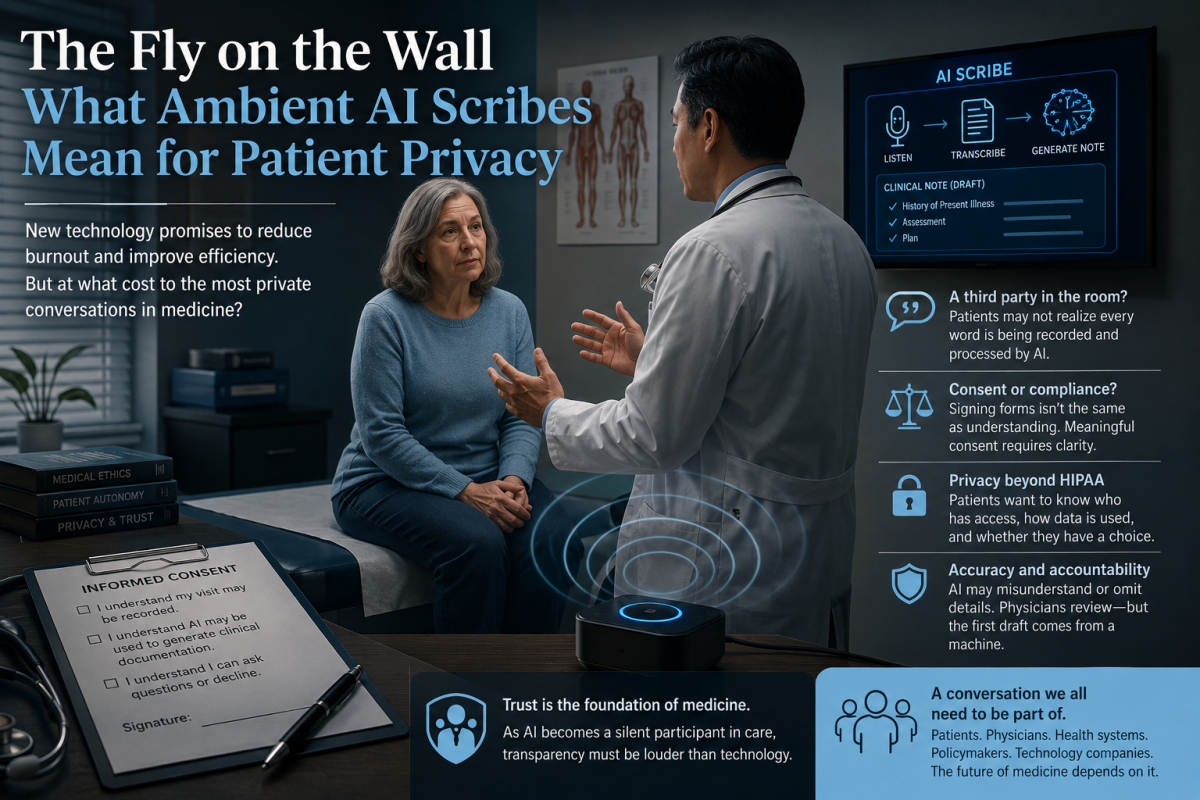
🏥🤖 Artificial intelligence is quietly entering one of the most private spaces in society: the doctor’s examination room. Hospitals and healthcare systems across the United States are rapidly adopting AI-powered “ambient scribes” such as **Abridge** and **Suki**, tools designed to listen to physician-patient conversations, automatically generate medical notes, and reduce the administrative burden that contributes to physician burnout. While many doctors praise the technology for allowing them to spend more time engaging with patients and less time typing into computers, the rapid expansion of these systems is raising important questions about privacy, transparency, and trust.
At the center of the debate is a simple but powerful question: **Do patients fully understand that an AI system may be listening to and processing their conversations?** Recent lawsuits involving healthcare organizations that use ambient AI documentation tools have brought national attention to concerns surrounding disclosure, consent, and patient awareness. Although these systems are generally deployed within HIPAA-compliant frameworks, critics argue that legal compliance alone may not be enough when deeply personal conversations are involved.
Unlike traditional electronic health records, where physicians manually enter information after a visit, ambient AI participates at the very beginning of the documentation process. These tools actively listen, transcribe conversations, identify medically relevant information, and generate summaries that become part of a patient’s record. For many patients discussing sensitive issues such as mental health, cancer diagnoses, addiction, domestic violence, infertility, or financial struggles, the presence of an invisible digital listener may feel fundamentally different from speaking directly with a physician.
Supporters argue that AI scribes can strengthen the physician-patient relationship by reducing screen time and allowing doctors to focus more fully on their patients. However, healthcare ethicists note that meaningful informed consent requires more than simply signing paperwork or accepting a privacy policy. Patients deserve clear explanations about how AI systems work, what information is collected, who can access it, and whether they have the option to decline participation.
As artificial intelligence becomes increasingly embedded in healthcare, the larger challenge may not be technological but ethical. The future of AI-assisted medicine will depend on balancing innovation with long-standing medical principles of privacy, transparency, patient autonomy, and trust. The examination room has always been a place where patients speak openly because they know who is listening. As AI becomes part of that conversation, maintaining that trust may become one of healthcare’s most important responsibilities. 🩺🔒🌍
At the center of the debate is a simple but powerful question: **Do patients fully understand that an AI system may be listening to and processing their conversations?** Recent lawsuits involving healthcare organizations that use ambient AI documentation tools have brought national attention to concerns surrounding disclosure, consent, and patient awareness. Although these systems are generally deployed within HIPAA-compliant frameworks, critics argue that legal compliance alone may not be enough when deeply personal conversations are involved.
Unlike traditional electronic health records, where physicians manually enter information after a visit, ambient AI participates at the very beginning of the documentation process. These tools actively listen, transcribe conversations, identify medically relevant information, and generate summaries that become part of a patient’s record. For many patients discussing sensitive issues such as mental health, cancer diagnoses, addiction, domestic violence, infertility, or financial struggles, the presence of an invisible digital listener may feel fundamentally different from speaking directly with a physician.
Supporters argue that AI scribes can strengthen the physician-patient relationship by reducing screen time and allowing doctors to focus more fully on their patients. However, healthcare ethicists note that meaningful informed consent requires more than simply signing paperwork or accepting a privacy policy. Patients deserve clear explanations about how AI systems work, what information is collected, who can access it, and whether they have the option to decline participation.
As artificial intelligence becomes increasingly embedded in healthcare, the larger challenge may not be technological but ethical. The future of AI-assisted medicine will depend on balancing innovation with long-standing medical principles of privacy, transparency, patient autonomy, and trust. The examination room has always been a place where patients speak openly because they know who is listening. As AI becomes part of that conversation, maintaining that trust may become one of healthcare’s most important responsibilities. 🩺🔒🌍
Tags
news
Comments (0)
Login to post comments
No comments yet
Be the first to share your thoughts about this post.